
British Racecourse Attendance Records: Post-Pandemic Crowd Statistics
I have been watching the attendance numbers come out every January for as long as I can remember, and the 2025 figures landed differently from the previous half-decade. For the first time since 2019 – the last full year before the pandemic – British racecourses welcomed more than five million spectators across the calendar. The number itself is 5,031,640, up 4.8 per cent year on year, and it is the line in the Racecourse Association’s half-year reports that everyone in racing has been waiting to print without caveats.
Attendance is not the same as betting turnover. It is not the same as television audience. It is not the same as commercial revenue. But it is the most physical and least gameable indicator of whether the public still cares about going to the races, and in an industry that has spent the last fifteen years asking whether the social-occasion proposition still holds up, the five-million number matters. What follows is the year-on-year arithmetic, the Royal Ascot benchmark, the gap between the crowds and the betting handle, and the realistic outlook into 2026.
How the Five-Million Line Got Crossed Again
The 2024 baseline was 4,799,730 spectators across 1,410 completed fixtures, with average attendance up a modest 0.4 per cent year on year to 3,404 per meeting. That was already a recovery against the pandemic-affected 2020 and 2021 numbers, but it sat below the symbolic five-million mark by a margin that felt structural rather than cyclical. The 2025 jump – adding roughly 230,000 spectators in twelve months – came from a combination of factors that show up clearly in the per-meeting numbers.
Average attendance per fixture rose meaningfully across both codes. Flat fixtures benefited from a warmer summer and stronger weekend cards; jumps fixtures benefited from the Cheltenham Festival’s return to capacity attendance and a Grand National that drew the largest Aintree crowd in five years. The festival weeks consistently drove the headline numbers, but the steady weekly fixtures recovered too – a sign that the cultural habit of going to the races on a sunny Saturday is rebuilding among the demographic that drifted away during lockdown.
The Racecourse Association’s chief executive, David Armstrong, framed the 2024 figures in January 2025 by noting that, given the wider economic difficulties impacting households across the country and the increased amounts of on-demand domestic entertainment, the numbers gave cause for optimism – that horseracing is unique amongst major sports in attracting customers looking for elite sport and a fantastic social occasion. The framing matters because it acknowledges the headwinds (cost of living, streaming substitutes) while emphasising the differentiating product (live racing as a social day out). The 2025 jump suggests the framing was correct and the underlying proposition is recovering its pull.
Royal Ascot as the Benchmark Number
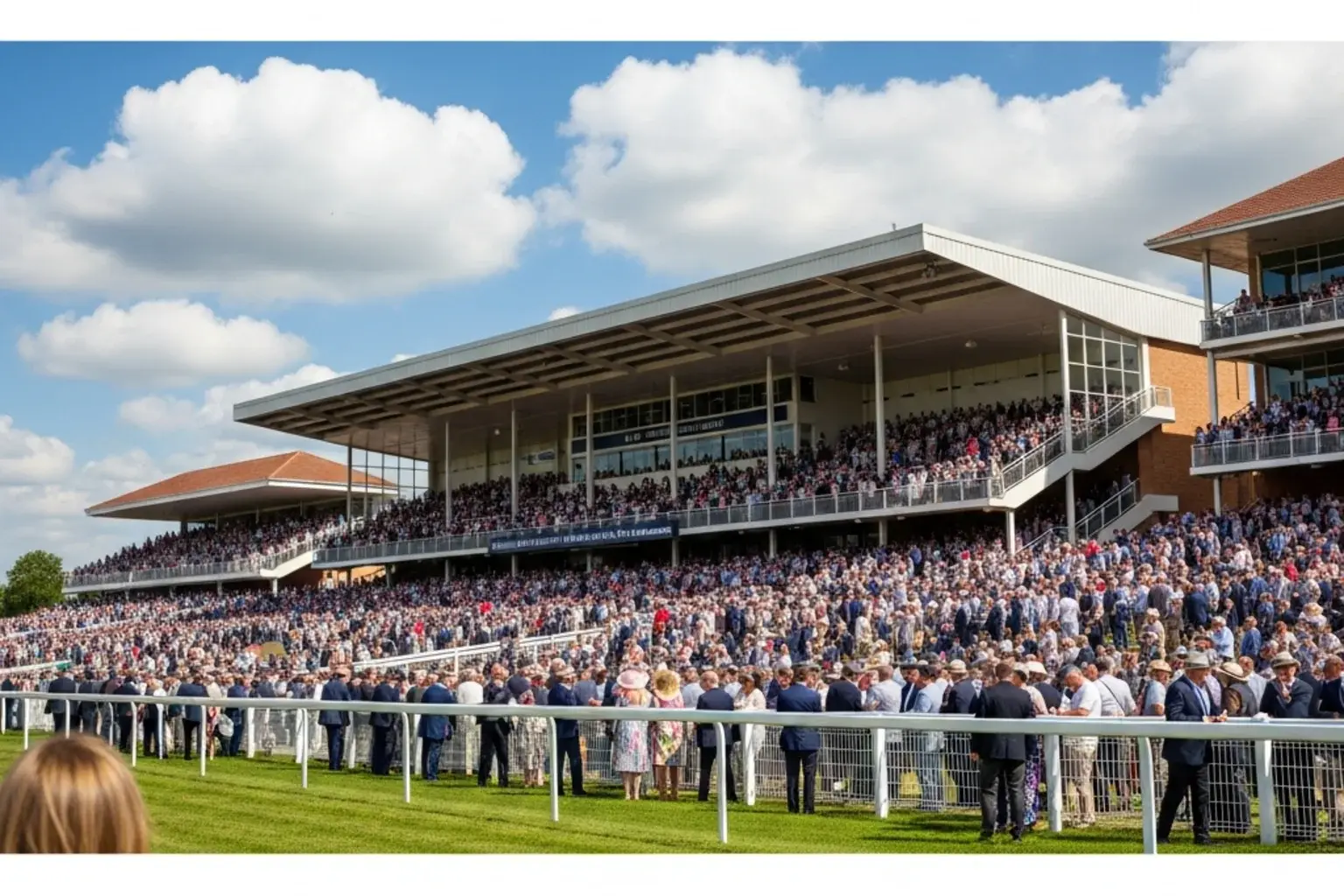
Royal Ascot is the gold-standard benchmark for British racecourse attendance, and the four-year average from 2022 to 2025 sits at 54,984 spectators per day, totalling more than 1.09 million across the period. The number includes all enclosures across the five-day meeting and is verified through ticketing data. No other meeting in Britain comes close to that daily figure; Cheltenham’s festival days run between 65,000 and 70,000 but spread across fewer enclosures and on cheaper average ticket prices.
What makes the Royal Ascot benchmark useful as a reference is its consistency. Through four very different summers – including a cool wet 2024 and a hot dry 2025 – the daily average has stayed within a few thousand of the long-run mean. The booked daily capacity at Ascot is around 60,000 and the meeting routinely sells through 90 per cent or more of available tickets. The Royal Meeting demand has held up through every economic squeeze of the post-pandemic period, and the bookmaker volume tracking that demand has held up alongside it.
The Royal Ascot week also doubles as a marker for the wider summer flat festival ecosystem. When Royal Ascot’s numbers hold, the Goodwood, York and Doncaster numbers tend to follow. When Royal Ascot wobbles, the regional summer festivals usually wobble too. The five-day Royal Meeting is the leading indicator for the entire flat-season social calendar, which is why it has become the headline statistic that the Racecourse Association leads with in every annual report. The vocabulary around the Royal Meeting – enclosures, dress code, the Royal Procession, the carriage parade – is covered in the Royal Ascot betting terms vocabulary.
The Attendance-Turnover Gap, and What It Tells You
Here is the line that haunts British racing’s strategic conversation: attendance is up, betting turnover is down. The 2025 BHA Racing Report covering the first nine months of the year showed total betting turnover off 4.2 per cent year on year and 12.8 per cent against 2023, with average turnover per race down 5.8 per cent. The 2024-25 HBLB report noted that the average turnover per race was eight per cent below 2023-24, 15 per cent below 2022-23, and 19 per cent below 2021-22 – a three-year compounded decline that the attendance growth does not begin to offset commercially.
The gap is not a paradox; it is a structural shift. The casual social-occasion punter who goes to the races and bets the on-course Tote pool or buys a £5 each-way ticket from the rails bookmaker contributes very little to the total betting turnover, which is now overwhelmingly online. The online betting customer, by contrast, never attends the racecourse and is not counted in any attendance figure. The two populations have diverged: race-going has become a social event that produces modest betting handle, while online betting has become a remote activity disconnected from the live spectator economy.
That divergence shows up most sharply when you compare the festival weeks. Cheltenham 2025 produced roughly 68.8 million separate bets across the major UK bookmakers – a colossal online volume – while the on-course attendance, by comparison, averaged around 67,000 per day across the four days. The online bets-per-spectator ratio is approximately 250 to 1 for the festival, and even higher for the Grand National, where the casual punter who never sets foot at Aintree dominates the total handle. Around 50 per cent of total Grand National revenue comes from stakes of £5 or less, indicating just how heavily the event leans on casual punters making small bets from home.
What 2026 Looks Like From Here
The 2026 attendance picture starts with momentum and ends with uncertainty. The cost-of-living squeeze is easing more slowly than the headline inflation numbers suggest, and the cohort of casual race-going punters is sensitive to discretionary spending. Festival ticket prices have risen faster than general inflation across the last three years, which may cap the upside on the headline meetings. Conversely, the Premier-versus-Core fixture restructure means more of the marketing investment is concentrated into fewer high-profile cards, which tends to lift attendance at the headline meetings even if the midweek picture stays flat.
The Cheltenham Festival 2026 is forecast to attract around £450 million in betting turnover across the four days, which signals a healthy online appetite for the showpiece. Whether that turnover converts into on-course attendance growth is a separate question – historically, betting handle and attendance correlate loosely but not tightly, and the on-course numbers depend more on ticket pricing and travel infrastructure than on the broader market mood.
The one factor that could compress 2026 attendance materially is the Remote Gaming Duty increase from 21 per cent to 40 per cent, due in April 2026. That change targets online casino rather than racing, but it tightens operator margins overall, which has knock-on effects on racing’s commercial deals – sponsorship, prize-money contributions and racecourse partnerships. A weaker bookmaker industry tends to spend less on visible racecourse marketing, and that tends to dampen recreational attendance over a one-to-two-year lag. The five-million line crossed in 2025 is the floor I would expect to hold through 2026; the upside depends on whether the festival weeks can absorb price-sensitive punters who might otherwise watch from the pub instead of buying a ticket.