
Grand National Each-Way Places: Payout Fractions for Expanded Fields
If you want to understand British horse racing as a betting market, you do not start with Cheltenham or Royal Ascot or any of the championship cards. You start with the Grand National. Forty minutes of national attention, the largest single recruiting day on the bookmakers’ calendar, and the one race in the year where the place-market structure changes annually because the operators are scrambling to outbid each other for the casual punter’s afternoon.
The places matter at Aintree more than at any other British race because the field is enormous, the attrition is severe, and the variance in the each-way market is statistically the only defensible edge a casual punter has. A win bet on a 33/1 outsider is a punt. An each-way bet on the same horse, with seven or eight or ten paid places, is a different proposition mathematically. The bookmakers know this. The extra-places offers exist because the bookmakers have read the data on how National punters bet, and have built their offers to look generous on the only metric the casual punter genuinely understands.
This is the piece I would hand to my sister-in-law in early April when she asks me, as she does every year, which operator she should put her £5 each-way on Captain’s Quay or whichever runner has caught her eye. The answer is rarely the same year on year. The right operator for a Grand National bet in 2026 is not the right operator for the Cheltenham Champion Hurdle the month before, and the differences come down to the place structure and the extra-places overlays. By the end of this piece you will know how to read those structures, which years they earn their stripes, and where the marketing hides the trapdoor.
Once you master place fractions, you can incorporate them into Lucky 15 and Yankee multiples bets to maximize potential payouts.
The Grand National Place-Rule Baseline
Before we get to the extra-places offers, we need the baseline. The baseline is the place structure the bookmakers would offer on the Grand National if no marketing department had ever existed. It is set by the each-way conventions of British racing applied to a handicap of the National’s size.
For any handicap race with 16 or more declared runners, the standard each-way rule across British retail and online bookmakers is four paid places at one-quarter of the win odds. The four places are first, second, third and fourth. The 1/4 fraction applies to the place component of an each-way bet. So a £5 each-way bet on a 20/1 horse, on the baseline four places, returns the £5 win stake at 20/1 if it wins (£105 in total returns including stake) plus the £5 place stake at 20/1 x 1/4, or 5/1, if it places (£30 in total returns). If the horse wins, both components pay. If it places second, third or fourth, only the place component pays.
This baseline is the floor. Every Grand National place offer you will see in March and early April is some variation on improving the floor — more places, longer fractions, or both. The baseline matters because it is the comparison point that tells you whether an extra-places overlay is genuinely improving the bet or whether the marketing is simply restating what would have been offered anyway.
The British Horseracing Authority does not set the place fraction itself. That is a commercial decision made by individual bookmakers. What the BHA does set is the race conditions — the field size cap, the weight allowances, the qualifying criteria for entry — which then drive the bookmakers’ place decisions through the field size that comes out at the other end. A handicap with 16 to 20 runners attracts the baseline four places at 1/4. A handicap with 22 to 25 runners often attracts five or six places at 1/4 from the more competitive operators, even before any explicit Grand National promotion. The Grand National’s field of 34 sits well above any of those breakpoints and so the bookmakers have a free hand to set whatever place structure they think will win the marketing argument that year.
The other piece of the baseline worth understanding is the place fraction itself. The standard is 1/4. Occasionally on flat handicaps and certain jumps races the place fraction drops to 1/5, which is worse for the punter — the place component pays less for a given price. On the Grand National it is essentially universal practice to apply 1/5 odds, not 1/4, on the extra-places offers, because the bookmakers compensate for the extra paid positions by tightening the place fraction. Read both numbers when you compare offers. The headline place count is meaningless without the fraction attached.
From Forty Runners to Thirty-Four
The most consequential change to the Grand National place market in a generation has nothing to do with bookmakers. It happened on the racetrack itself. The maximum field for the Grand National was reduced from 40 to 34 runners with effect from the 2024 renewal, as part of the safety reforms imposed by Aintree and the Jockey Club following the post-race welfare review.
That cut sounds smaller than it is. Six runners is a six per cent reduction in the headline field number, but on a race where finishing in the first eight or ten is the genuine punting target for an each-way slip, the cut compresses the variance significantly. The casual punter who used to back a 50/1 outsider knowing that eight places paid out is now backing the same horse into a field where only the top ten finishers are within plausible range of an extra-places offer, and where the baseline four places represent a more competitive cut-off.
The safety reforms had wider effects than the field size. The race was moved earlier in the afternoon to reduce the impact of horses that had been running on heavy ground at earlier fixtures, the first fence was moved closer to the start to slow the runners on the opening approach, and the qualifying criteria for entry were tightened. The cumulative effect is that the 34 runners who do go to post each year are, on average, more experienced and more capable than the corresponding 40 a decade earlier. The race itself has become closer to a competitive contest among credentialled jumpers than the wide-open lottery it sometimes resembled in the 1990s and 2000s.
What does that mean for the each-way punter? Two things. First, the relative value of backing genuine outsiders has compressed. A 100/1 horse in the 34-runner field of 2026 is, on average, a less probable placer than a 100/1 horse in the 40-runner field of 2018. Second, the extra-places overlays — the seven and ten and eight-place offers the bookmakers run — have become structurally more valuable, because the gap between a baseline four places and a marketing-extended seven places represents a larger proportion of the surviving competitive field.
In short, the 2024 reform did not just make the race safer. It changed the punter’s optimal each-way strategy, and it made comparing extra-places offers across operators a more financially material exercise than it had been in any previous era of the race.
The Extra-Places Arms Race in 2026
Every year, somewhere between mid-March and the morning of the race, the major UK operators publish their Grand National place terms, and somewhere between mid-March and the morning of the race the racing press writes the annual comparison piece. I have written some version of that comparison piece myself on at least eight occasions. The 2026 edition has a clear leader, a clear challenger, and a middle pack scrambling for relevance.
The headline numbers for 2026 are these: Sky Bet is paying seven places at 1/5 odds — more places than any other major British operator. Bet365’s Each Way Extra concession is paying up to ten places on the same race. Those two structures sit at the top of the table. The remaining major operators are mostly clustered between five and six places at 1/5 odds, with various overlays and refund promotions stacked on top.
That spread — seven versus ten versus five-or-six — looks like a straightforward “more is better” comparison. It is not. Each offer carries conditions that reshape the value, and the right offer for your particular slip depends on what kind of horse you are backing and how much you are willing to engage with the small print. The detail of each is worth walking through.
Sky Bet’s Seven Places at 1/5
Sky Bet’s seven places at 1/5 is the cleanest of the headline offers. The structure is straightforward — finish in any of the first seven and the place component pays at one-fifth of the win odds. The offer applies to each-way singles only; multiples are not covered. The cut-off is 5 p.m. on the day before the race, which is later than several competitors and helps casual punters who write their slips the night before.
What makes the Sky Bet offer particularly strong is the absence of a price-related restriction. Some extra-places offers exclude horses priced below 8/1 or 10/1, on the basis that the bookmaker does not want to give away the extra places on the favourites. Sky Bet’s seven-place offer applies across the board. That matters because the National favourite at the off in 2026 is likely to be priced around 8/1 to 10/1 — fair value historically — and the punter who fancies the favourite each-way is well served by the seven places without restriction.
The trade-off in the Sky Bet offer is the place fraction. 1/5 is shorter than the 1/4 baseline that would apply at most other operators on a smaller-field handicap. On a 20/1 horse, a 1/5 place fraction returns the place stake at 4/1 versus 5/1 at the 1/4 baseline. That difference is real but it is more than compensated for, in expected-value terms, by the additional three paid places.
Bet365’s Each Way Extra Up to Ten
Bet365’s Each Way Extra is a different kind of offer. It is not simply “we will pay more places”. It is a structured concession that lets the punter choose, at the point of placing the bet, how many places to take and at what fraction. The 2026 offer extends up to ten places, but the punter who selects the maximum places does so by accepting a tighter fraction in return — the slip recalculates the effective place price as the place count rises.
In practice the Each Way Extra slider offers a series of pre-set combinations: four places at 1/4, five places at 1/5, six places at 1/6, all the way up to ten places at a fraction that is essentially 1/10 of the win odds. The economics of those combinations are not equivalent. On a 33/1 horse the trade-off between six places at 1/6 (place returns at 5.5/1) and ten places at 1/10 (place returns at 3.3/1) is genuinely material — you are paying for the extra places in place-component returns.
The Bet365 structure rewards punters who think hard about field position. If you have a strong opinion that your horse will finish somewhere in the first six or seven, the lower-place / higher-fraction combinations are likely the better economic choice. If you are backing a longshot with a genuine prospect of staying on for an eighth or tenth, the maximum-places option is the bet. The flexibility is the offer, more than the headline ten-place number.
Paddy Power, William Hill and the Specialist Offers
Below the Sky Bet and Bet365 headline offers sits the broader pack of major operators, each running their own variation on the extra-places theme. Paddy Power, William Hill, Betfred and Ladbrokes have all historically run six or seven place offers on the National with various combinations of fractions and refund overlays. The detail varies year to year and operator to operator, but the structural patterns are consistent enough to be worth describing.
The typical mid-pack offer is six places at 1/5, applied to each-way singles only, with a refund concession layered on top. The refund concession is the marketing line that turns “we are paying one extra place” into a headline. Common refund overlays include: stake-back-as-a-free-bet if your horse falls or is brought down before fence one, stake-back-as-a-free-bet if your horse finishes second, and occasionally double-the-odds-if-your-horse-wins as a separate concession.
Treat the refund offers carefully. Stake-back-as-a-free-bet is genuinely a concession — if your horse falls at the first you get the stake to bet again, with the constraint that the refund is in free-bet form (which typically returns winnings only, not the stake on the free-bet itself). Stake-back-if-your-horse-finishes-second is a useful concession on shorter-priced runners but rarely material on a National where second-place winners come at long prices and the each-way place component on a 25/1 horse at 1/5 returns a worthwhile sum anyway. Double-the-odds promotions are usually capped at a maximum payout that limits their value on the long-priced winners they would in theory most benefit.
One operator-specific note worth keeping in mind: the smaller specialist racing operators sometimes run extra-places offers that beat the big-brand headlines on a number-of-places basis but apply more restrictive price floors. A seven-place offer that excludes anything priced below 14/1 is less valuable, in aggregate, than a six-place offer with no price restriction. Read the small print on every offer that looks generous at first glance.
Non-Runner-No-Bet, Refunds and Money-Back Specials
The Grand National draws an unusually high volume of ante-post betting because the build-up runs for weeks and the casual punter often writes their slip days before the final declarations are confirmed. That timing creates a particular problem: what happens if your horse does not run? The answer depends on whether the bookmaker has applied non-runner-no-bet to the relevant market.
Non-runner-no-bet, abbreviated to NRNB on most bookmaker pages, is a commercial promise that converts an ante-post slip into something closer to a normal each-way bet. Under standard ante-post rules, a horse that does not run loses your stake — the bet is settled as a loser irrespective of why the horse failed to declare. Under NRNB, the bookmaker refunds your stake if the horse is withdrawn before the off. For the National, most major operators run NRNB from the day the 40-day entries are published, which is roughly six weeks before the race.
The window matters. If you place an ante-post bet on a horse that is then withdrawn at the five-day declaration stage, you want NRNB to apply. If the bookmaker has not applied NRNB to that market, you lose the stake. Some operators run NRNB throughout the ante-post window; some only from the five-day stage onwards; one or two run it only from the morning of the race. Read which window the offer applies to before staking ante-post.
Beyond NRNB, the Grand National concession landscape includes a handful of structurally common offers worth knowing by name. The “fallers refund” or “stake back if your horse falls” promise returns your stake — usually as a free bet, occasionally as cash — if your horse falls, is brought down, unseats its rider or refuses before reaching a specified point on the course. The specified point is normally the first fence, sometimes the second, and the exact wording matters because a horse that is brought down at the third fence does not qualify for an offer that applied only at the first.
The “money back if your horse finishes second” offer is structurally a place insurance, applied as a stake refund (cash or free bet) if your selection is beaten into the second position. On a race where the place component already pays out to seventh, eighth or tenth depending on operator, the second-place refund is essentially a top-up that converts your each-way returns on a second-placed selection into something closer to a win.
Treat these refund offers as marginal value added rather than the headline reason for choosing an operator. The place structure is the structural decision. The refund offers are the marketing decoration on top. If two operators offer essentially equivalent place terms and one runs an additional fallers refund, that is a tiebreak in favour of the second operator. If two operators have meaningfully different place structures, the place structure should drive the decision and the refund concession is a secondary consideration.
The Economics of the Casual Punter
I want to stop talking about place structures for a moment and talk about the punter. Because the place structures only exist in the form they do because of a particular demographic that turns up once a year, writes a slip, and goes back to ignoring racing until next April.
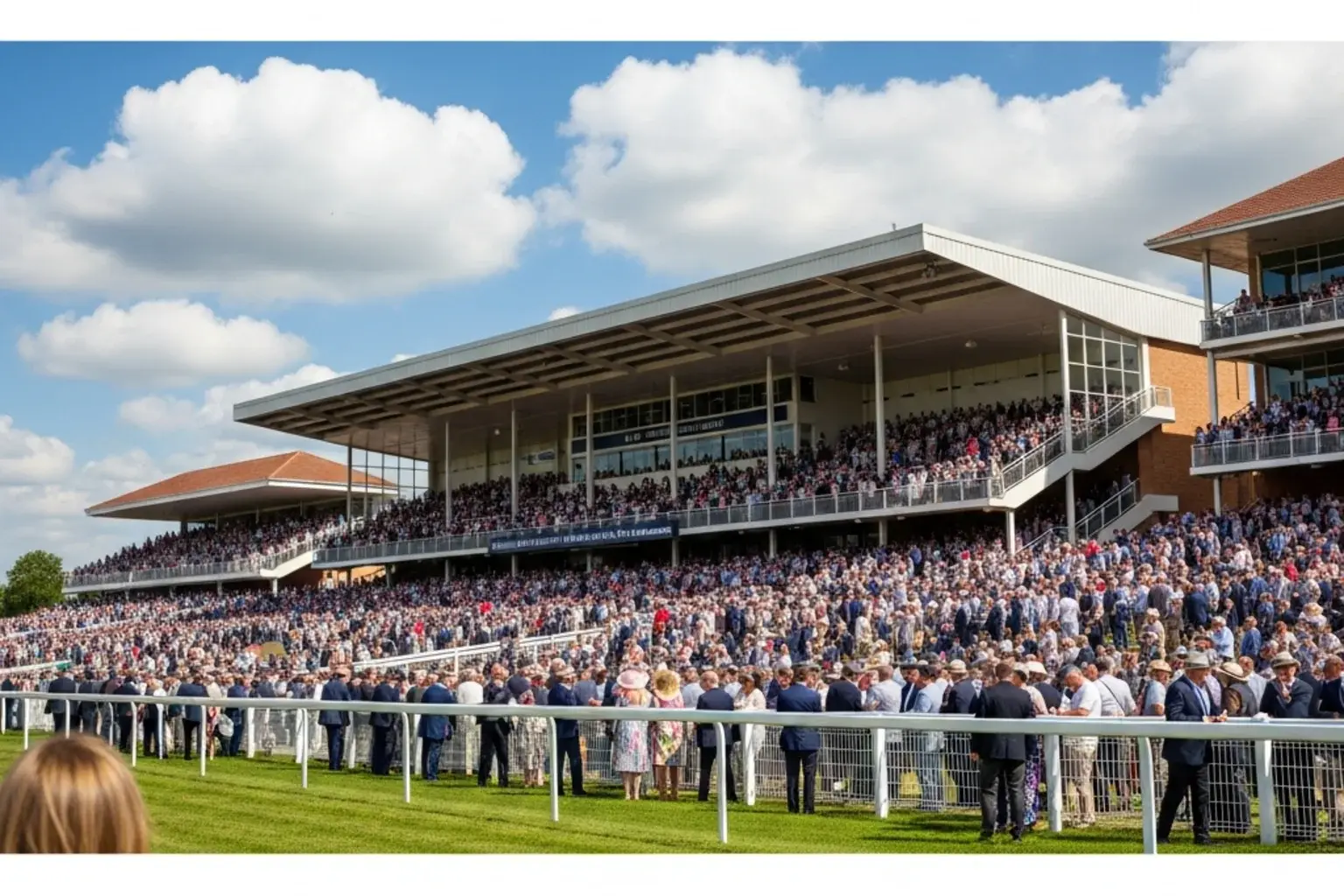
The numbers are striking even after a decade of watching them. The Grand National 2025 attracted approximately £200 million of bookmaker turnover on the race alone, with the full Aintree Festival across three days totalling around £250 million. Roughly half of that £200 million came from stakes of £5 or less. About 30 per cent of the punters who staked on the race either made their first deposit of the year on the day or were returning customers who had not bet since the previous April. The race itself saw 700 per cent more bets placed than the Cheltenham Gold Cup of the same year. Grainne Hurst of the Betting and Gaming Council captured what the race is in a single phrase — it is the nation’s punt
— and the data backs that description in a way that no other British race comes close to.
What that data tells you about the bookmakers’ marketing decisions should be self-evident. The seven-place offer at Sky Bet, the ten-place Each Way Extra at Bet365, the fallers refunds and the second-place money-back promotions — these are not aimed at the regular punters who write Yankees on a Cheltenham Tuesday. They are aimed at the £5 each-way casual who picks the horse with the name they like, or the horse their nan tipped them, and who needs the promise of “we will pay if your horse comes seventh” in order to feel that the slip is worth writing.
The economics for the bookmaker are extraordinary. A casual punter recruited on Grand National day, with a £20 first deposit and a £5 each-way bet on the race, has a customer lifetime value to the operator that justifies, in pure marketing-spend terms, an offer worth £3 to £5 of expected value on the National bet itself. That is why the extra-places offers exist. The bookmakers are buying the customer at a discount on the National in the expectation of selling them football and casino through the rest of the year. The transaction is honest enough — both sides get what they want — but it is worth understanding that the place-market generosity on this race is, in aggregate, an acquisition cost paid by the operator’s other verticals.
For the regular punter who would otherwise have ignored the place market on race day, the implication is straightforward. The extra-places offers are genuinely valuable on the National in a way they are not on most other races, because the bookmakers are willing to give away expected value to recruit casuals. Backing each-way runners at 25/1 to 40/1 on a slip covered by seven or eight paid places at 1/5 is one of the better-value bets on the British calendar, even after the inflated favourite prices and the tightened place fraction. The casual punter wins because they enjoy the slip. The regular punter wins because the structure is overlaid. The bookmaker wins because the National recruits the casual back into the customer base. If you want to understand the corresponding ecosystem at Cheltenham, where the dynamics are different but the volumes are even larger, I have written separately on the betting vocabulary specific to the Cheltenham Festival.
Discover more strategies and definitions in the ultimate British racing betting guide before placing your next wager.
Aintree Beyond the National
The casual punter sees the National. The regular punter sees the festival. Aintree’s three days carry a card structure that rewards punters who pay attention to the Thursday and Friday meetings, not just the headline race on Saturday.
Thursday is Liverpool Day. The card is anchored by the Manifesto Novices’ Chase and the Aintree Bowl, the latter being one of the highest-quality chases of the British jumps season and a frequent target for Cheltenham Gold Cup runners-up looking to compensate for a near-miss the month before. The Bowl is the race that often produces the better each-way value on Thursday’s card because the Cheltenham form is recent and the going at Aintree can be a meaningful upgrade or downgrade depending on the spring weather.
Friday is Ladies’ Day, and the card centres on the Aintree Hurdle and the Mildmay Novices’ Chase. The Mildmay is the race that often produces the more competitive each-way market because it is open to novices who may not have completed at the Cheltenham Festival three weeks earlier and the form lines are accordingly less settled.
Saturday — National Day — carries seven races on the card, of which the National itself is the sixth race. The undercard includes the Topham Chase, which is run over the same fences as the National but at a shorter distance, and the Foxhunters’ Chase, a hunters’ chase also over the National fences. Both Topham and Foxhunters’ attract a particular style of betting because the field sizes are large, the place markets are often as wide as the National’s, and the bookmakers’ extra-places offers sometimes extend across these races as well. Read the operator’s terms page to see whether the National extra-places concession also applies to the Topham; sometimes it does, sometimes the operator wants the marketing to attach only to the headline race.
The wider point is that an Aintree-weekend punting strategy that ignores Thursday and Friday is leaving most of the value on the table. The casual punter will be drawn back to the National on Saturday whatever you write here. The regular punter who wrote a Thursday slip on the Bowl and a Friday slip on the Mildmay enters Saturday with a better feel for the going, the trainers in form, and the structural strength of the favourites at the head of the National market. That feel is worth more than any extra-places overlay the bookmakers can offer.