
Regional UK Racecourse Mapping: Track Directions and Local Fixtures
Britain has 59 licensed racecourses, more than 500 training yards, around 660 breeding operations, and an industry that delivers roughly £4.1 billion of direct and indirect value to the UK economy every year. Those numbers always read better laid out than summarised, because the density is the point. France has around 250 courses but only fifteen or so of them race more than a handful of times a year; the United States has well under a hundred active flat tracks; Australia has thirty or so first-rank venues across a country bigger than Europe. Britain, on its small island, sustains close to sixty separate tracks each with its own personality, calendar and parochial loyalists.
I have been to most of them at one point or another, and the regional variety is the part that surprises people who arrive at the sport through television. Sandown looks nothing like Yarmouth, Yarmouth looks nothing like Perth, Perth looks nothing like Brighton. This article is a tour of where the courses are, what shapes they run in, and the regional character that makes each one’s vocabulary slightly different. It is not exhaustive – sixty tracks deserve their own book – but it is the orientation I wish someone had handed me when I was learning the geography.
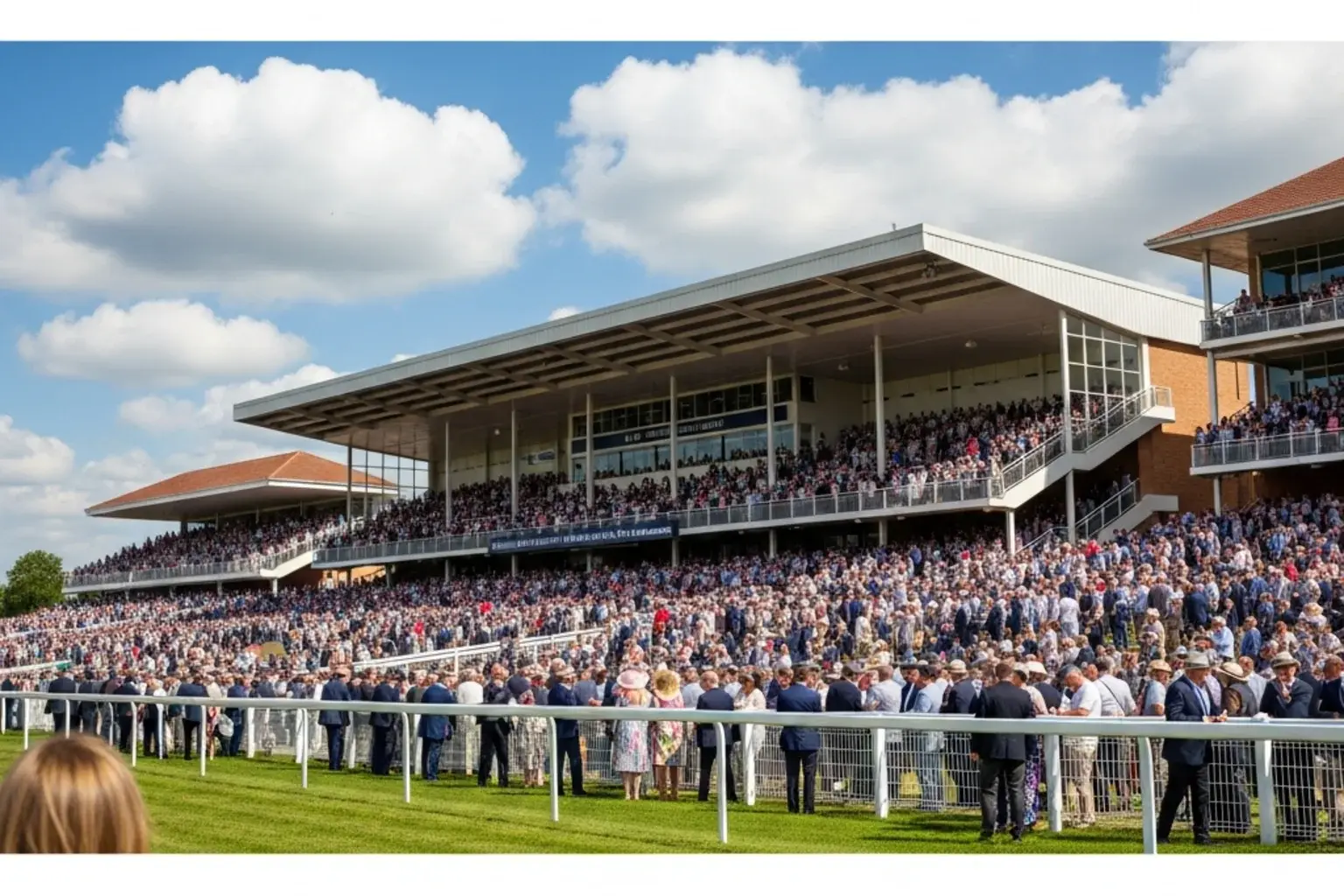
The geographical spread of these tracks directly influences the annual UK racecourse attendance figures across different regions.
England by Region: Where the Density Lives
England holds 39 of Britain’s 59 licensed racecourses, and they cluster geographically in ways that map onto centuries of breeding-and-betting history. The south-east – broadly the Home Counties – accounts for Ascot, Sandown, Kempton, Lingfield, Epsom, Goodwood, Brighton, Plumpton, Fontwell, Folkestone (now closed but still listed historically), Windsor and Newbury. The density reflects historic London proximity: when racing was inseparable from London social life in the eighteenth and nineteenth centuries, courses clustered within carriage range of the capital. Ascot is the most prestigious. Goodwood is the prettiest. Sandown and Kempton are the workhorses. Epsom holds the Derby because of its peculiar topography. Each course has its own card identity that the regular punter learns to read.
The Midlands – Warwickshire, Leicestershire, Nottinghamshire and the surrounding counties – adds Cheltenham, Warwick, Stratford, Worcester, Hereford, Nottingham, Leicester, Uttoxeter, Southwell and Wolverhampton. Cheltenham dominates the conversation, but the regional ecosystem matters: Warwick and Stratford run popular spring and summer cards, Uttoxeter runs the Midlands Grand National, and Southwell and Wolverhampton anchor the all-weather circuit. The North-East holds Beverley, Catterick, Hexham, Newcastle, Pontefract, Redcar, Ripon, Sedgefield, Thirsk and York – with York’s Ebor festival in August functioning as the regional Royal Ascot, drawing crowds and turnover that rival the southern showpieces. The North-West has Aintree, Bangor-on-Dee (in Wales technically but historically grouped here), Carlisle, Cartmel, Chester, Haydock and Market Rasen.
South-West England runs Bath, Exeter, Newton Abbot, Salisbury, Taunton and Wincanton – a slightly quieter regional cluster, but one with deep National Hunt roots through Taunton and Wincanton. East Anglia covers Fakenham, Great Yarmouth, Huntingdon and Newmarket – and Newmarket alone deserves separate treatment, with its two distinct courses (the Rowley Mile and the July Course), its position as the centre of British flat training, and its concentration of breeding operations that make it the most important square mile in world flat racing.
Scotland and Wales: Five Tracks That Punch Above Their Weight
Scotland has five licensed racecourses: Ayr, Hamilton Park, Kelso, Musselburgh and Perth. The split is roughly central-belt urban tracks (Musselburgh near Edinburgh, Hamilton Park near Glasgow) and country tracks (Ayr in the south-west, Kelso in the borders, Perth in the central highlands). Perth runs only jumps and is exclusively a summer-into-early-autumn fixture, raised on a magnificent country estate setting. Kelso is jumps-only and similarly atmospheric. Ayr runs both codes, with the Scottish Grand National in April as the headline event. Musselburgh runs a heavy fixture list across both codes and has become Scotland’s busiest track by some distance. Hamilton Park runs a flat-only schedule across the summer.
Wales has three licensed tracks: Bangor-on-Dee (jumps-only, in the north-east), Chepstow (both codes, in the south, with the Welsh Grand National as its headline event) and Ffos Las (both codes, in Carmarthenshire, the newest British racecourse, opened in 2009). The Welsh tracks are less commercially developed than the major English venues but each has its own loyal regional audience and its own distinctive racing character. Chepstow’s Welsh National in late December is the winter jumps highlight for many punters, attracting a national following that outstrips the course’s regular fixture turnover.
Northern Ireland is not part of the licensed BHA fixture list – Down Royal and Downpatrick are administered through Horse Racing Ireland rather than the British Horseracing Authority. They appear on British bookmakers’ boards but they are not counted in the 59-course total. The integration is commercial rather than regulatory, and British form lines coming out of those courses sit slightly outside the standard UK rating system.
Left, Right and Figure-of-Eight: The Direction Vocabulary
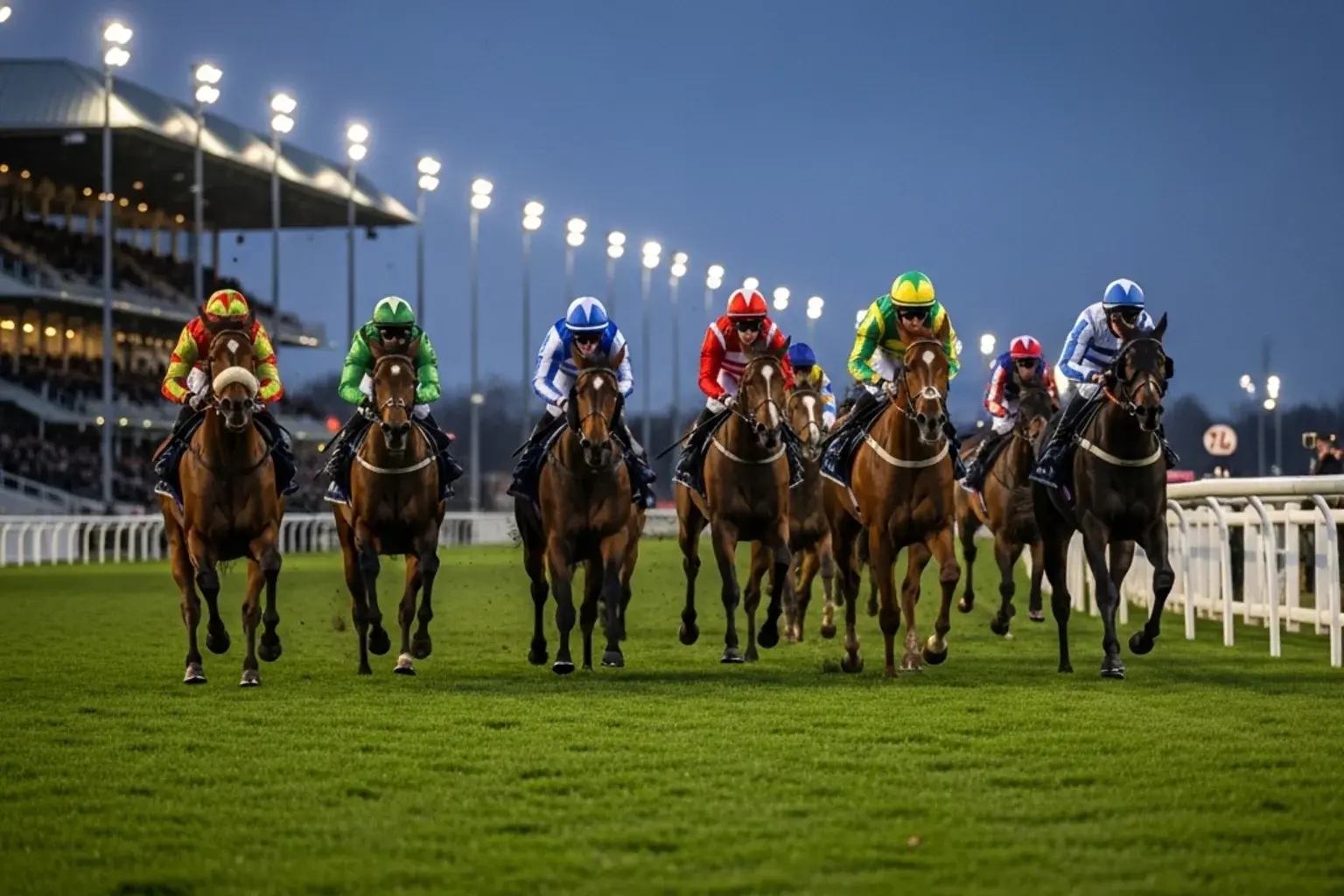
British racecourses run in three directions: left-handed (anti-clockwise), right-handed (clockwise) and figure-of-eight. The direction matters for several reasons – horses develop a one-handed preference through training, jockeys position differently on different camber profiles, and the betting market prices the direction as one of the surface-and-shape variables. Left-handed tracks form the majority: Cheltenham, Aintree, Sandown, Newbury, Goodwood, Epsom, Lingfield, Doncaster, Haydock and many more. Right-handed tracks include Ascot, Kempton, Sandown’s National Hunt course (which is left-handed, but Ascot is right and gets confused by newcomers), Warwick and Newmarket’s July course.
Newmarket itself is unusual: the Rowley Mile course is a straight mile and an extension, with no turns, and the July course is right-handed for races over a mile but functions as a straight course for sprints. The classification depends on the race distance. Some courses have separate flat and jumps configurations: Sandown’s jumps course runs left-handed, its flat course runs right-handed off the same general track. Punters need to read the racecard fixture description for the day, not the course’s general reputation, because the same physical venue can present different directions for different cards.
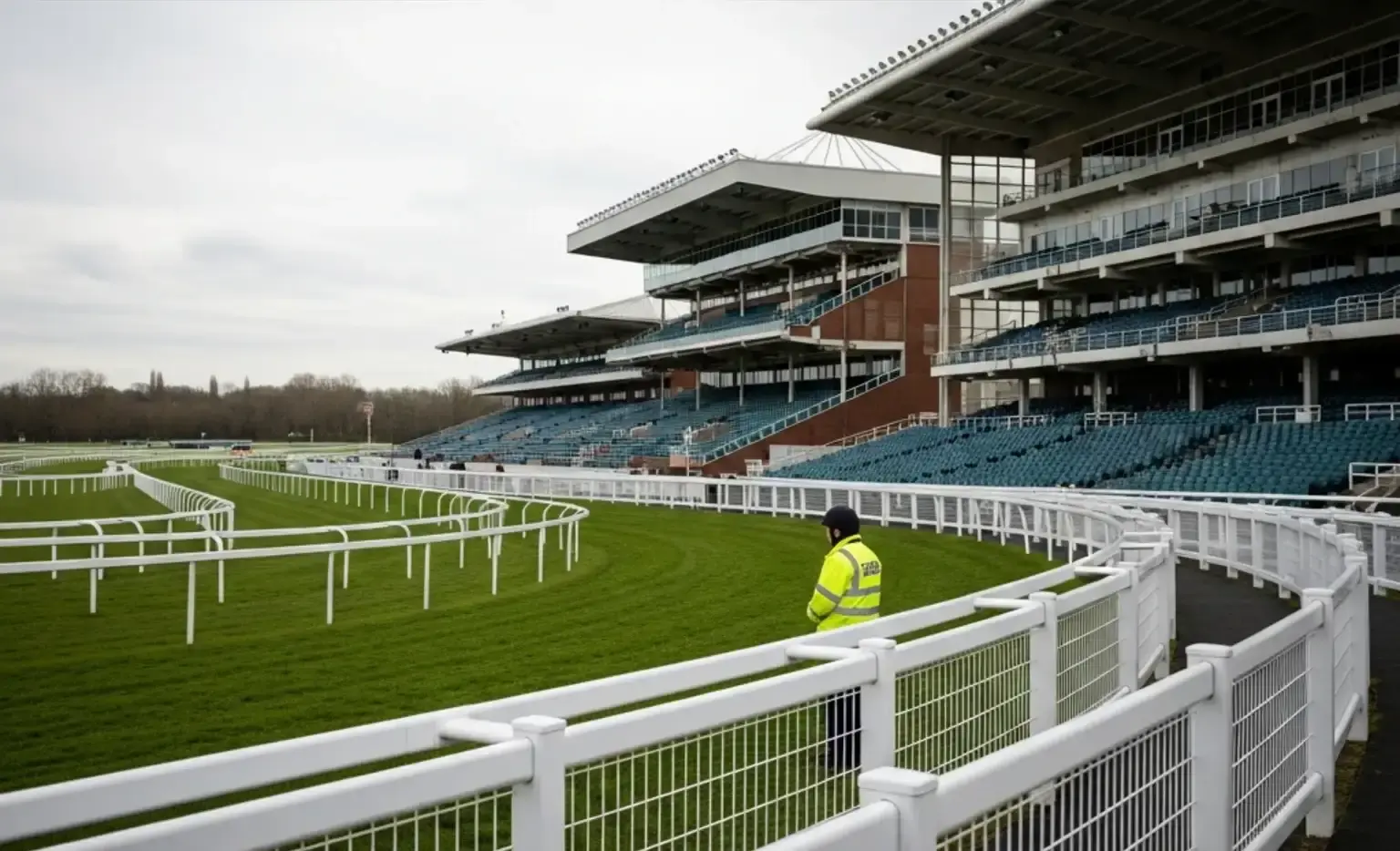
Figure-of-eight tracks are the rarities. Fontwell Park in West Sussex is the classic figure-of-eight, with two separate ovals crossing at a single point and producing one of the most distinctive racing experiences in Britain. Windsor’s flat course is figure-of-eight as well. Both produce unusual race patterns – horses must change direction mid-race, jockeys must judge two different turns, and front-running tactics can either work brilliantly or fall apart entirely depending on the pace through the crossing. The figure-of-eight vocabulary is small but specific, and the form book at these tracks reads slightly differently from the standard oval tracks.
Plan your next track visit by consulting the leading resource for British racing punters.
Regional Quirks and the Classics Calendar
The five English Classics – 2,000 Guineas, 1,000 Guineas, Oaks, Derby, St Leger – run at three different courses: the Guineas pair at Newmarket Rowley Mile in May, the Oaks and Derby at Epsom in early June, and the St Leger at Doncaster in September. Each course’s classic carries its own course-specific demands: the Newmarket straight rewards horses that travel well, Epsom’s downhill turns and undulations reward versatility, Doncaster’s long galloping straight rewards stamina. Reading the classics calendar is partly reading the courses underneath it.
Regional festival meetings spread the classic-week pattern across the year: York’s Ebor in August, Goodwood’s Glorious in late July, Ayr’s Western Meeting in September, Sandown’s Tingle Creek Saturday in December. Each meeting carries the same architectural feature – championship races wrapped around handicap consolation races, prize money concentrated in the headliners, retail betting traffic clustered into the broadcast hours. The regional spread is part of what gives British racing its texture: the calendar is not one festival a year, it is fifteen or so spread across both codes and most regions of the country. The attendance figures back this up: British racecourses welcomed 4,799,730 spectators in 2024, with average attendance up 0.4 per cent year on year to 3,404 per fixture – modest growth, well-distributed, and concentrated in the regional festival weeks rather than the everyday cards. The wider attendance picture and what 2025-2026 actually looks like are covered in detail in Britain’s racecourse attendance rebound.