
UK Tote Pool Mechanics: Calculating Placepot and Jackpot Dividends
The first Placepot I ever struck paid £148.40 to a £1 perm, and I remember the dividend more clearly than I remember three of the six horses I had on the slip. That number — that particular number — is the whole point of pool betting, and explaining why takes a little patience, because the Tote pool is not a different price on the same product. It is a different product entirely.
Britain has exactly one licensed pari-mutuel operator on horse racing, and it is the Tote. Everything sold under the Tote brand, and everything sold under the racecourse-owned Britbet operation that still nominally exists alongside it, runs through the same pool architecture. The mechanism is simple in shape and strange in detail. Punters put money into a pool. The operator takes a percentage off the top for costs and Levy. What is left divides among the winning tickets. The pay-out — the dividend — is calculated after the race, not before, and depends not on the horse’s morning price but on how many other punters backed the same horse.
That single design choice changes the language. A fixed-odds bookmaker quotes you a price. The Tote does not. The Tote shows you a running pool and an estimated dividend, both of which move as money flows in. Your slip is settled at a number that did not exist when you placed the bet. For punters trained on fractional odds, this is initially disorienting. Once you understand the logic, it becomes the bet you reach for on certain kinds of cards, and on certain races within those cards, where the pool maths is structurally on your side and the bookmakers are pricing defensively. The rest of this piece is the field guide to that logic.
Unlike pool betting where dividends depend on the crowd, fixed-odds markets are shaped by the bookmaker overround and profit margin.
How Pari-Mutuel Works in Britain
Imagine for a moment that the bookmaker has been removed from the room. No board, no chalk, no price-setter. Instead, every punter who wants to bet on a race puts their stake into a glass bowl in the middle. After the race, the operator takes a slice off the top, and the rest of the bowl is shared among the people who picked the winner. That is pari-mutuel. The Tote runs precisely that system, with software in place of glass bowls, on every British meeting that supports a Tote pool.
The slice off the top is called the takeout. On most Tote markets it sits between 13 and 30 per cent of the pool, depending on the bet type — lower for win-only pools, higher for the exotic bets like Placepot and Jackpot where the operator builds in a wider margin to cover the cost of running the carry-over architecture. The takeout is published, but it is not always conspicuous. If you want to know exactly how much of your stake is going to the pool and how much is going to the operator, the figure is on the Tote’s terms page for each pool type.
What remains after the takeout is the dividend pool — the actual money that will be paid back to winners. The dividend itself is the per-£1-stake share of that pool that each winning ticket receives. If the dividend pool on a place market is £40,000 and 8,000 unit-of-stake winning tickets share it, the dividend is £5 to a £1. The dividend is published as a £1-unit figure regardless of what you actually staked, which means a £2 ticket on a £5 dividend pays £10, a £5 ticket pays £25, and so on.
The void shares concept is worth pausing on. If one of the horses on your slip is withdrawn, the Tote does not deduct from your dividend the way a fixed-odds bookmaker would. Instead, the pool treats the void selection as a non-event for that leg, and your remaining selections continue to run. Depending on the bet type, this can be either neutral or expensive — neutral on win pools, expensive on Placepot legs where the void leg is replaced by the SP favourite, which is sometimes far from what you would have picked.
One more piece of context. The wider British online betting and gaming sector — within which the Tote sits as a smaller, specialist part — runs 24.4 million active accounts and holds about £1 billion in customer balances. The Tote’s share of those numbers is modest. Pool betting in Britain is no longer a mass-market product. It is a specialist’s product with a passionate audience and a structural design that, on the right card, beats the fixed-odds bookmakers on the very thing the bookmakers exist to do — pricing.
The Placepot — Saturday’s Quiet Bet of Choice
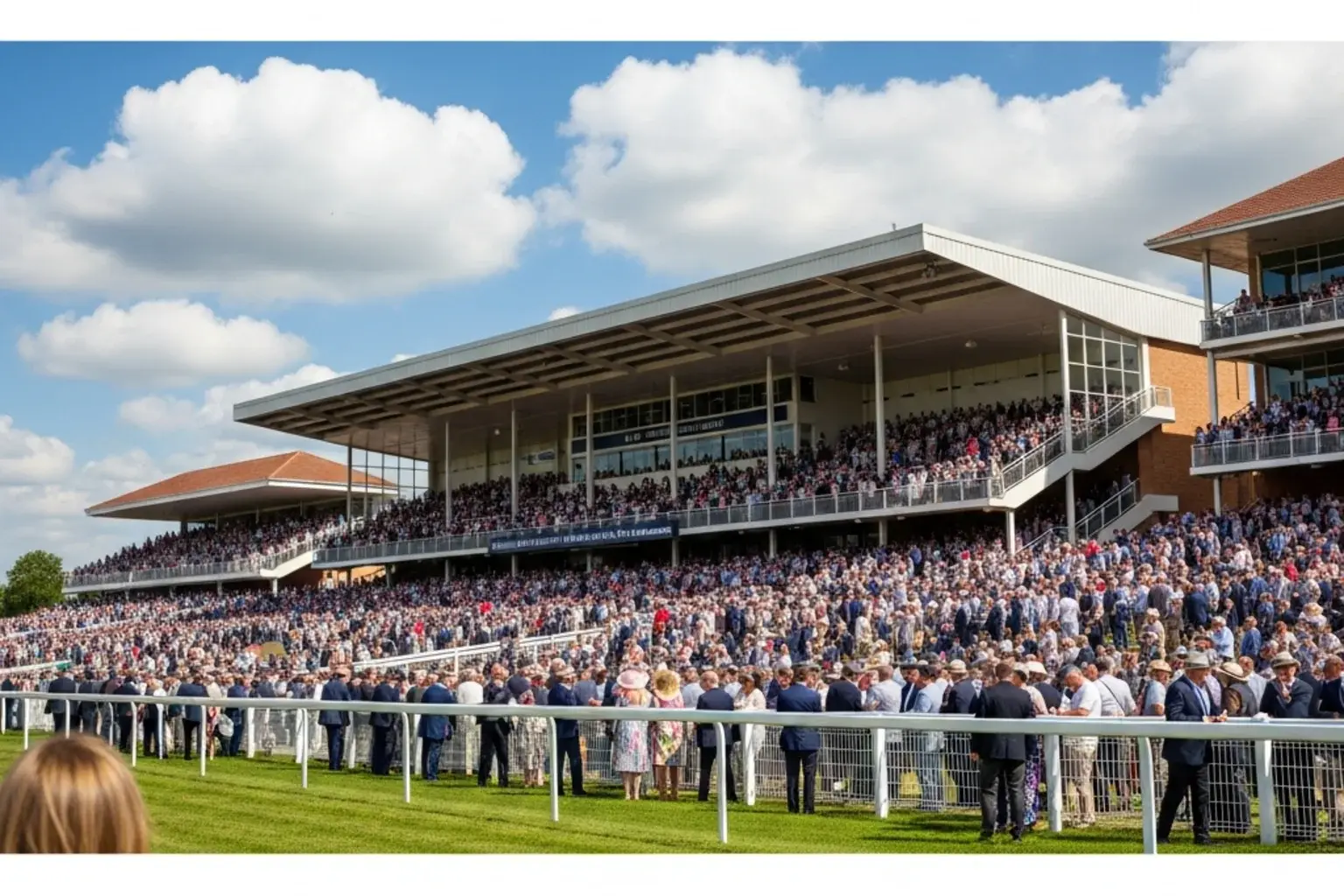
I will admit a bias here. The Placepot is my favourite bet on the British calendar, and on the right Saturday I will leave the win markets entirely alone and just write a Placepot perm for the afternoon. It is the most British of pool bets — a six-leg place-only ticket on the first six races of a meeting — and on cards that drew 4,799,730 racecourse attendees across 2024, it is the bet that defines the modest, social, end-of-Saturday-afternoon punt.
The rules are clean. You pick at least one horse to place in each of the first six races at a specified meeting. If all six of your selections place — that is, finish within the place positions paid out by the Tote, which mirrors the fixed-odds place fractions for that race — you collect a share of the dividend pool. The minimum unit stake is 50p at racecourse and online, sometimes lower on app-only promotions.
A “perm” is the punter’s word for permutation. If you fancy one horse in race one, two in race two, one in race three, three in race four, two in race five and one in race six, the perm is 1 x 2 x 1 x 3 x 2 x 1 = 12 lines. At 50p a line that slip costs £6. The Tote app does the multiplication automatically, but it is worth being able to count the lines yourself, because the slip can scale fast. Two horses in each of six races is 64 lines — £32 at 50p, £64 at £1. Three in each is 729 lines, and at that point you are no longer writing a Placepot, you are writing a wage packet.
The Placepot dividend is the most reliably surprising number in British pool betting. A perm that you would expect, on fixed-odds maths, to return roughly £50 will often return £150 or £200 to a £1 unit. The reason is mathematical: the dividend is calculated against the pool minus takeout, divided among the surviving tickets. On a meeting where favourites get beaten in two of the six legs, the surviving ticket count collapses, and the dividend balloons.
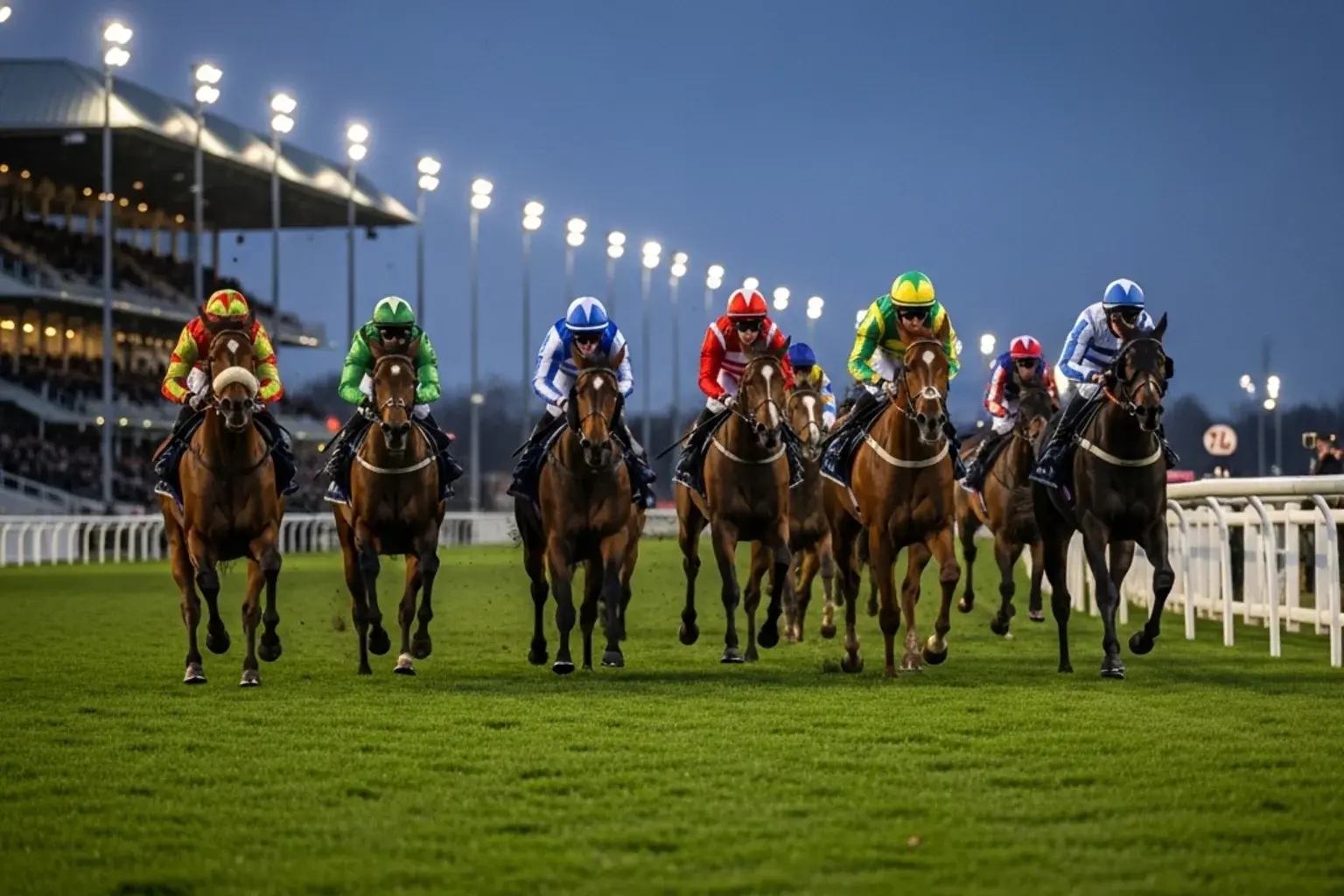
The strategic geometry of a Placepot rewards a particular kind of opinion. You do not need to pick winners. You need to pick horses that will finish in the place positions. On a typical British handicap with eight to fifteen runners, the place positions are first, second and third (or four places for 16+ runner handicaps), and the place fraction is 1/5 or 1/4 of the win odds. That changes the bet hunt entirely. A 6/1 horse with a strong place record on its current going is often a better Placepot leg than a 5/4 favourite with an erratic finishing pattern.
The Placepot is also the bet where the void-share rule matters most. If your selection in leg three is withdrawn after declarations, your ticket carries forward into leg three with the SP favourite as a substitute selection. Sometimes the SP favourite places and your perm survives without your intended selection ever running. Sometimes the SP favourite does not, and a slip that depended on a clever leg-three pick gets killed by a horse you never wrote on the slip. It is the most random element in the bet, and learning to live with it is part of becoming a Placepot punter.
The Jackpot and the Language of Rollovers
If the Placepot is the social bet of Saturday afternoon, the Jackpot is the syndicate bet — the one written in pen on a torn-off sheet of A4 by four mates in a pub, with their selections circled and a perm worked out at the bottom that sometimes runs into hundreds of pounds. The Jackpot is six winners from the first six races, win-only, no place consolation, and the dividend is the kind of figure that occasionally turns up in the news pages.
The architecture is identical to the Placepot in shape but unforgiving in detail. You must pick the winner of each of the first six races at the designated meeting. Place finishes are no consolation. One losing leg kills the slip. The minimum unit stake is 50p at racecourse and online, perm calculations identical to the Placepot — multiply selections across the six legs and that is your line count.
The defining feature of the Jackpot, and the thing that makes it culturally distinct from any fixed-odds bet, is the carry-over. If nobody picks all six winners on a given day, the entire dividend pool — minus takeout — rolls forward to the next eligible meeting. Add another day’s stakes on top, no winning tickets, and the pool rolls again. By the third or fourth consecutive carry-over, the dividend pool can run into six figures, and the syndicates start to pay attention.
That is when the language of “guaranteed pools” becomes important. The Tote sometimes adds a top-up to the pool from its own marketing budget when a particularly strong meeting coincides with a rolling Jackpot — Cheltenham Thursday, Ascot’s Champions Day, the King George VI Boxing Day card. The guaranteed pool figure is published in advance, and it acts as a magnet for casual punters. When the guarantee runs ahead of the actual stakes, the punters who do put money in benefit from the structurally better-than-fair dividend, because the operator is, in effect, subsidising the prize.
The syndicate strategy works on three principles, none of them complicated. First, agree the perm structure before the slip is written — too many cooks produces perms that cost more than they earn. Second, vary the legs by certainty: two or three solid singletons on races where one of you has a strong opinion, and broader coverage on the legs you genuinely cannot read. Third, always check that the perm is within the syndicate’s collective comfort zone before it goes on. A £200 Jackpot slip among four punters is £50 each, which is a reasonable Saturday investment. A £600 slip, split four ways, becomes a conversation about who said yes to what.
The Jackpot can be staked as a single-line bet for 50p. I have seen single-liners win, occasionally, on cards where one punter has read every race correctly. More often the Jackpot is a perm bet. Either way, the dividend on a successful slip is calculated as the pool minus takeout, divided among the unit-of-stake winning tickets, and on a heavy carry-over day the per-£1 dividend can run into the low five figures. Those are the numbers that make the bet what it is — and the structural reason the Jackpot remains a fixture of the British racing calendar even though the bookmakers have spent two decades trying to push punters towards fixed-odds equivalents.
The Quadpot and the Other Pools
If the Placepot is the six-leg slip and the Jackpot is the six-leg win-only slip, the Quadpot is the bet for the punter who turned up late. It is a four-leg place-only slip running across races three through six at the same designated meeting. The Quadpot starts when the Placepot is already underway, which means a punter who walks into the racecourse bar at half past two can still play a pool bet on the rest of the afternoon’s card without having missed any legs.
The Quadpot mechanics are identical to the Placepot but compressed. Four legs, place selections, 50p minimum unit stake, perm calculations the same way. Dividends are smaller on average than Placepot dividends, because the pool is smaller — fewer punters, fewer stakes, fewer carry-overs. But on a card where two of those four legs throw up double-figure-priced placers, a Quadpot can pay out at numbers the fixed-odds market simply will not match.
Beyond Placepot, Jackpot and Quadpot, the Tote runs a handful of smaller pools that deserve a brief mention. The Tote Exacta is a win pool bet on the first two finishers in correct order, structurally similar to the fixed-odds Forecast but settled on the pool dividend. The Tote Trifecta is the same idea on the first three finishers. The Tote Swinger is a less-known bet — any two of the first three finishers, in any order — and dividends on Swingers can be eye-catching on competitive handicaps with strong-priced placers.
The Scoop6 is worth mentioning historically. It was the Saturday-only seven-leg pool bet that ran for many years as the Tote’s flagship product, with carry-overs that occasionally rolled into seven figures. The Scoop6 was wound down as a distinct product when the Tote restructured its exotic pools in the late 2010s, with its functions distributed across the Placepot and Jackpot architecture. You will still occasionally hear punters refer to “Scoop6 days” when a Saturday rolling Jackpot reaches headline-worthy levels, but the bet itself is no longer on the slip.
The pools also benefit, indirectly, from the broader strength of attendance figures. In 2025 British racecourses recorded 5,031,640 attendances — up 4.8 per cent year on year and the first time the five-million mark was passed since 2019. That on-course punter is the Tote’s natural customer, and the pool sizes on the day’s first six races at major meetings reflect the rebound in racecourse footfall. The Tote is, more than any other bet type, a bet whose health depends on the gates being open and the bar being busy.
The Tote Merger and the Britbet Aftermath
Until 2019, British pool betting on horse racing operated under a confused dual-branded structure that was difficult to explain to anybody who had not lived through it. The Tote brand itself was operated by a commercial company. Britbet was the racecourse-owned operation that had been set up in 2018 with the intention of taking pool betting under direct racecourse ownership. The two operated in uneasy parallel for less than a year before commercial logic asserted itself.
The merger was completed in 2019. The commercial Tote was acquired by a consortium led by racecourse interests, and Britbet was rolled into the same operation. The dual branding persisted on some racecourse signage and on a residual set of Britbet kiosks for a couple of years afterwards, but in practice the pool architecture was unified under the Tote brand and the Britbet name now functions essentially as a legacy marker.
The reason this history matters is that it explains the current shape of the Tote’s commercial position. The pool operator is owned, in effect, by the racecourses whose meetings it pools. That alignment is not perfect — the major operating racecourses have stronger commercial voices than the smaller ones — but it is a meaningfully better alignment than the old structure, where a commercial Tote was running pools on racecourses that had no economic stake in the operator’s success.
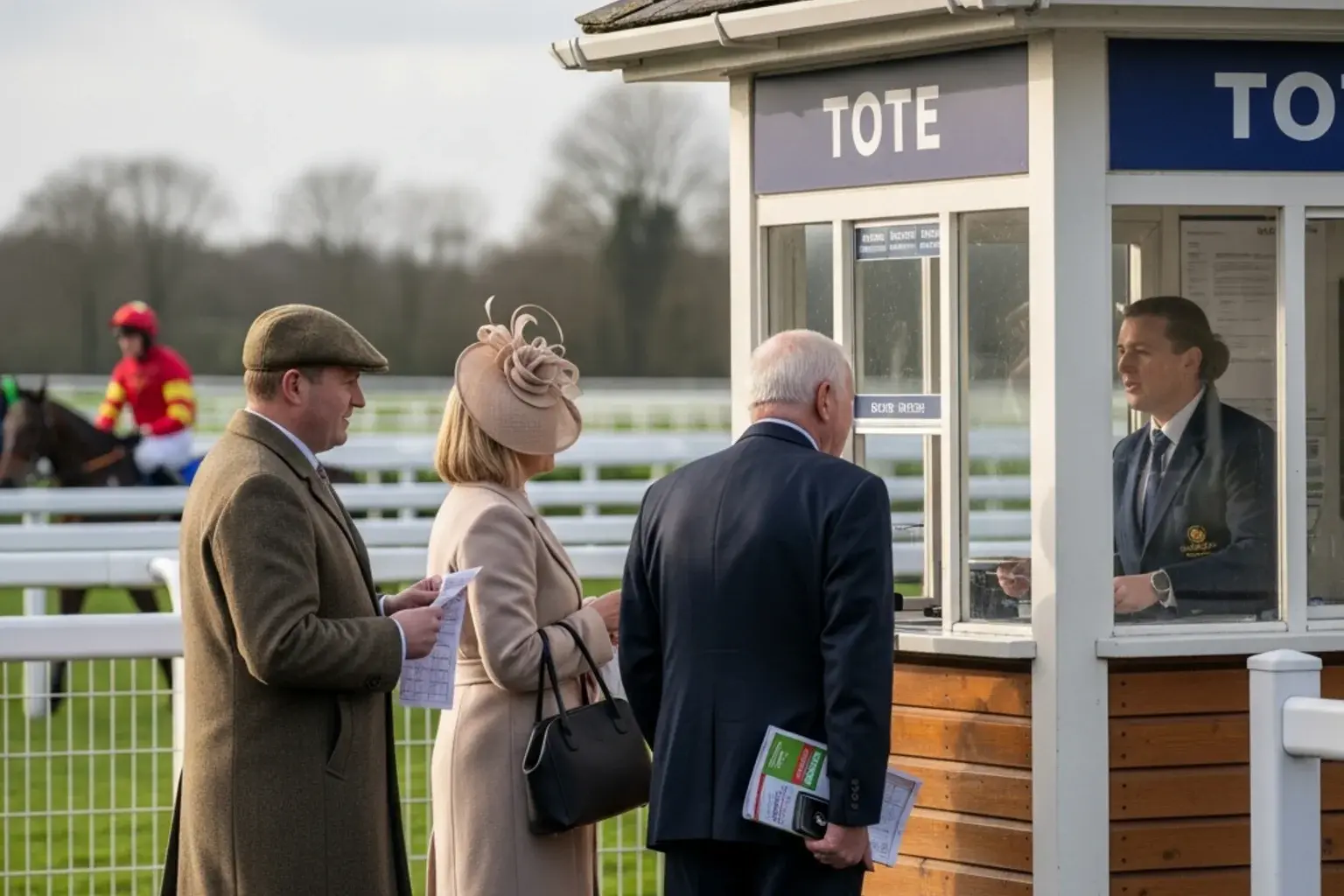
The merger also resolved an awkward problem with on-course presence. Before 2019, certain racecourses ran Tote kiosks and certain ran Britbet kiosks and a handful ran both, with punters genuinely confused about whether the slip they were writing went into the same pool as the slip the punter next to them was writing. Today the answer is universally yes. There is one pool. One dividend. One set of takeout figures. The kiosks may carry either brand depending on which signage the racecourse refreshed most recently, but the bet is the same.
The post-merger reality has been a slow recovery in pool betting volumes on the back of stronger racecourse attendance and the steady rebuild of the Tote’s online and app offering. If you want the broader picture of where those attendance figures sit and how they have driven racecourse-economy recovery, I have written separately on how UK racecourse attendance has rebuilt across 2025 and into 2026. The Tote’s commercial future is bound up in those numbers more than in any product reform.
When to Choose the Pool Over Fixed Odds
There is a question I get asked every Saturday morning by a particular subset of punters: “Pool or fixed odds today?” The honest answer, which most punters do not want to hear, is that the choice depends on the race, the field, and the structural state of the bookmakers’ market that day. Pool beats fixed-odds in identifiable situations. In most other situations, fixed-odds wins.
Pool beats fixed-odds on big-field handicaps. The reason is simple. Bookmakers price big-field handicaps with high overrounds — sometimes 140 per cent or worse on twenty-runner handicaps — because the layers’ uncertainty about the outcome is genuine and the overround compensates. The Tote pool, by contrast, simply divides the takeout-adjusted pool by the winning ticket count. On a big-field handicap where the result is genuinely competitive, the Tote dividend on a place-pool ticket frequently exceeds the equivalent fixed-odds place payout, particularly if the winner comes in at a double-figure price.
Pool also beats fixed-odds on outsiders. A 25/1 horse priced by a fixed-odds bookmaker is essentially that bookmaker’s working guess at how unlikely the horse is to win. The pool’s dividend on the same horse is determined by what other punters thought, and the crowd is sometimes wrong in interesting ways. I have seen Tote win dividends on second-favourites of around 10/1 on the boards, where the bookmakers’ SP came back at 7/1. Those dividends exist because the crowd was over-investing in the favourite. They are not predictable in advance, but they happen often enough to be worth noticing.
The wider context is that gross gambling yield in the British industry — the combined total across all sports betting and gaming — rose 7.3 per cent in 2024/25 to £16.8 billion. The Tote’s share of that figure is small, but the pool’s strength has always been counter-cyclical. The Tote does well precisely when the bookmakers are pricing defensively, because the pool reflects punter behaviour rather than operator caution. David Armstrong of the Racecourse Association put the case for what racing offers in a way that I think extends to the Tote’s market position: Horseracing is unique amongst major sports in that we attract customers looking for elite sport and a fantastic social occasion
. The Tote is the bet most embedded in that social occasion.
Where fixed-odds wins, by contrast, is everywhere else. Short-priced favourites in small fields. Big-name horses with established markets. Any race where the bookmakers have a genuine view and have priced sharply. On those races, the fixed-odds price is a better deal than the pool dividend will be, and the bookmakers’ BOG promise gives the punter a defensible option. Choose your terrain, write the slip appropriate to the terrain, and the bet you place will earn its keep more often than the bet someone else recommended on the way to the parade ring.
Always compare pool dividends with traditional odds using our expert horse racing terminology reference.