
Bookmaker Overround Percentages: Calculating Built-In Racing Margins
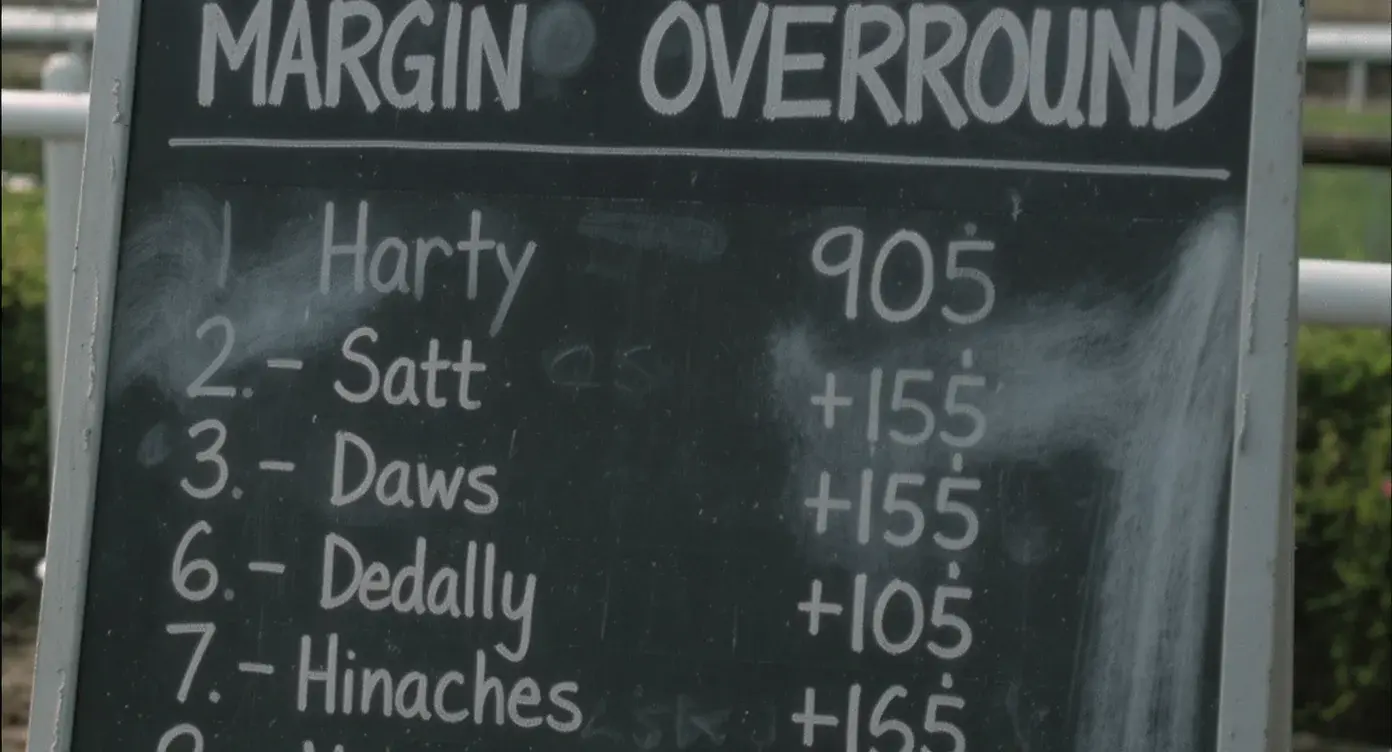
Walk past a high-street bookmaker’s window during a Saturday racing afternoon and the board is just a list of prices. Walk past with a calculator and the board tells a different story. The prices, taken together, do not add up to 100% – they add up to something more, typically between 105% and 130%, and that extra few percent is where the bookmaker’s margin lives. The figure has a name, it is called the overround, and learning to read it is the difference between feeling that one bookmaker’s prices are “tighter” than another’s and actually knowing it to the second decimal.
The overround is the single most important pricing concept in British bookmaking and it is the concept that the recreational punter is least likely to understand. I have spent enough Saturday afternoons working out the books on competitive handicaps to know that the overround on a 16-runner Cheltenham Festival handicap can differ by four or five percentage points between the major firms, and that difference is meaningful over a season of betting volume. This article explains what the overround is, how to calculate it from a racecard, what a balanced book versus an unbalanced book actually means in practice, and what the overround across the major firms tells the regular punter about where the value sits on any given race.
What Overround Is and Where the Margin Lives
The first principle is that betting odds are reciprocals of probability. A horse priced at 4/1 has an implied probability of 1/(4+1), or 20%. A horse priced at evens (1/1) has an implied probability of 50%. A horse priced at 9/2 has an implied probability of 1/(9/2 + 1), or 1/(11/2), or 2/11, or about 18.2%. Convert every horse on the racecard into its implied probability, sum the implied probabilities, and the resulting figure is the bookmaker’s book percentage. If the book percentage is exactly 100%, the bookmaker has zero margin – the prices reflect a perfectly fair book with no profit to the house. If the book percentage is 110%, the bookmaker has a 10-percentage-point overround, and the excess is the margin built into the prices.
The overround is therefore the operator’s structural margin on a competitive race, paid for by the implicit shortening of prices across all the runners. The figure is not the same as the operator’s expected profit on the race – that depends on how the volume distributes across the runners and where the result falls – but it is the upper bound of the operator’s expected profit if the book is balanced. A 110% book on a 12-runner handicap means the operator has built 10 percentage points of margin into the prices. If the betting volume distributes across the field roughly in proportion to the implied probabilities, the operator’s expected profit is approximately 10/110 – about 9.1% – of the total handle on the race.
The overround is the figure that justifies the existence of the bookmaker as a business model. Without overround, the bookmaker’s expected profit on a competitive race is zero net of operating costs, which is to say negative. The overround pays for the racecourse pitch, the technology infrastructure, the betting shop or app, the marketing budget, the staff, and ultimately the dividend to the shareholders. The figure is the most explicit measure of the bookmaker’s gross margin on the sport, and the variations across firms are the most direct expression of competitive pressure in the British retail betting market.
Working the Book Out in Practice
The mechanics of calculating an overround from a racecard are simple enough that any serious punter can do them in a few minutes on the morning of a Saturday card. Take the eight horses in a competitive handicap with the following prices on the bookmaker’s board: 5/2, 7/2, 9/2, 6/1, 8/1, 10/1, 14/1, 25/1. The implied probabilities are 2/7 (28.6%), 2/9 (22.2%), 2/11 (18.2%), 1/7 (14.3%), 1/9 (11.1%), 1/11 (9.1%), 1/15 (6.7%) and 1/26 (3.8%). Sum the figures: 28.6 + 22.2 + 18.2 + 14.3 + 11.1 + 9.1 + 6.7 + 3.8 = 114.0%. The book is a 114% book, and the operator has built 14 percentage points of margin into the prices.
The same calculation across the same race on a different bookmaker’s board might produce a 112% book, or a 116% book, and the punter who knows the figures can identify which firm is offering the best value across the field at any given moment. The tighter the book, the better the value for the punter on the field as a whole; the wider the book, the worse the value. The differences are not enormous – a 3-percentage-point difference between two firms on a competitive handicap is meaningful but not transformative on a single race – but they accumulate. A punter who consistently takes prices from the firm with the tighter book over a season of Saturday afternoons is materially better off than a punter who does not check the book.
The same arithmetic also exposes one of the simpler ways the bookmaker shapes the margin: the longest-priced horses on the racecard carry a disproportionate share of the overround. The 25/1 horse in the example above has an implied probability of 3.8%, but the bookmaker’s “true” probability for the horse – given the field and the form – might be 2.5% or less. The two-percentage-point gap between the implied price and the bookmaker’s read of the form is a meaningful share of the total 14-percentage-point overround on the race. The 5/2 favourite, by contrast, carries a much smaller overround share – the implied probability of 28.6% might be only one or two percentage points longer than the bookmaker’s read of the true probability. The implication for the punter is that the value rarely sits at the long end of the racecard, even though the headline prices look tempting.
A Balanced Book Is Not a Bookmaker’s Default
A balanced book is the textbook position where the bookmaker’s expected profit on the race is the overround percentage regardless of which horse wins, because the volume distributes across the runners exactly in proportion to the implied probabilities at the prices offered. The unbalanced book is the practical reality on any race that attracts serious money – one or two horses take a disproportionate share of the volume, the bookmaker’s exposure is concentrated on those horses, and the operator’s expected profit varies materially depending on the result. A bookmaker on an unbalanced book against a fancied horse is on a horse-by-horse position, not a portfolio position, and the profit and loss varies accordingly.
The mechanics of the unbalanced book are the central operational challenge of bookmaking in British racing. Take the same 8-runner handicap. The bookmaker’s book is 114% but the volume distribution is 35% on the 5/2 favourite, 25% on the 7/2 second favourite, and the remaining 40% spread across the other six runners. If the 5/2 favourite wins, the bookmaker pays out roughly 2.5x of the 35% volume – a payout equivalent to 87.5% of the total handle – and keeps the other 65%. The operator’s net position on a favourite win is a small loss relative to the take on the field. If the 25/1 outsider wins, the bookmaker pays out 25x of a small slice of the volume – perhaps 3% of the handle – and the payout is about 75% of the total handle, leaving a 25% profit. The result-dependent variance in the bookmaker’s profit is large, even on a book where the average is positive over time.
The bookmaker manages the unbalanced book through a combination of price-shortening on horses taking heavy money, laying off through the on-course or off-course markets, and accepting result-dependent variance as the cost of doing business in a competitive sport. The on-course market in particular is the layoff venue of choice for the major firms – the on-course rails bookmakers and the tic-tac signals that survived into the recent past are the historical infrastructure that allowed the big firms to manage their high-street exposure on a Saturday afternoon, and the modern electronic equivalent works in essentially the same way.
Comparing Firms and Reading the Wider Market State
The cross-firm overround comparison is the most useful diagnostic the regular punter has on the wider market state. On a typical Saturday Class 2 handicap, the major UK bookmakers typically run books between 108% and 115%. On the major festivals, the books tighten because the volume is higher and the competition between firms is more aggressive – Cheltenham championship races commonly run between 104% and 110%, and the Grand National book on Aintree Saturday is often the tightest book of the year at 102% to 106%. On small-field races and quiet midweek cards, the books widen – a 6-runner novice chase at Hereford on a Tuesday afternoon might run a 120% book, and the punter who bets the race without checking the figure is paying a much higher margin than they would pay on a Saturday at Doncaster.
The macro context matters as well. The British remote betting market has been under sustained pressure – Q1 2025 reporting from the Betting and Gaming Council showed total online turnover on horse racing down 9% year on year, with the Core fixture turnover down 14.4% against a flat Premier fixture line. By the third quarter of 2025 the year-on-year turnover decline had moderated to around 4.2% for the wider sport, but the underlying pressure on bookmaker handle had not gone away. In a contracting market, the bookmaker’s margin matters more, and the firms have responded by tightening the overround on the highest-volume races (the festivals and the Saturday handicaps) and widening the overround on the lower-volume races (midweek cards and small-field races) to protect the overall gross margin. The pattern is visible on the boards if the punter takes the time to check the figures, and the practical implication for the regular punter is that the value sits on the high-volume races where the books are tightest – typically the same races where the price competition between firms is most aggressive and where the difference between the Saturday morning board, the on-course board, and the eventual starting price can be a meaningful position in itself, as discussed in the difference between the morning board price and the on-course starting price.