
Decoding Racecard Form Figures: Translating Course and Distance Symbols
I have spent more years than I care to admit watching newcomers stare at a racecard. The number that confuses them most often is not the price, not the weight, not the trainer name – it is the little string of digits and letters next to the horse, the form figures. People assume the bookmaker has set those numbers for a reason they cannot quite work out, and they nod when someone explains it badly, then go and back the favourite because the form line might as well be in code.
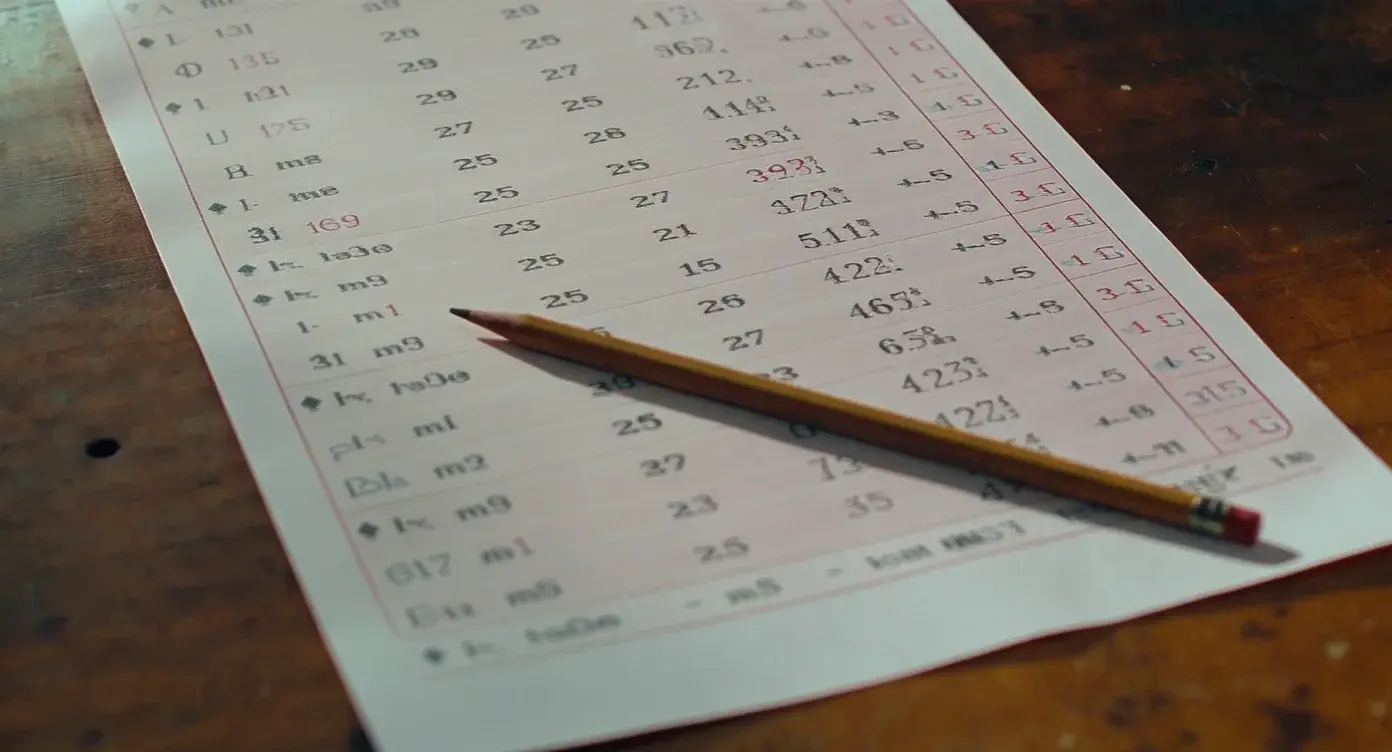
The form line is in code. It is a compressed history of the horse’s most recent runs, written so a settler in 1955 could read it across a noisy betting shop and still know what mattered. Once you learn it, the racecard opens up – you can read a horse’s career in two seconds, spot a hidden contender at 16/1, and tell the difference between a hurdler who fell three times in a row and one who has just had a long break. This article is the field guide, written exactly the way I wish someone had written it for me.
The Form String, From Left to Right
Form figures are listed in chronological order from oldest on the left to most recent on the right. The figure on the far right is the horse’s most recent run; the figure on the far left is the oldest in the displayed string. That order is the single most important thing to internalise. If you read it the wrong way round, every conclusion you draw is backwards.
The digits themselves represent finishing positions. A 1 means the horse won. A 2 means second. A 3 means third. A digit 4 through 9 means the horse finished in that position, and a 0 means the horse finished tenth or worse – the system caps at single digits because nineteenth-century printers had only so much space. So a form line of 31021 means, reading left to right: third, then first, then tenth-or-worse, then second, then first. The horse won its last race, having shown form before that. The string tells a story if you read it as a sequence rather than a sum.
The length of the form string varies by publication. Racing Post racecards show the last six runs as standard; some online cards show ten or twelve; some shop wallcharts show only the last four. The Form Book itself – the underlying data – extends to the horse’s entire career, but the racecard form line is a compressed sample of recent activity. That compression is deliberate. The recent runs predict the next run better than the lifetime record does, and a settler with five seconds to make a decision needs the recent runs more than the historical ones.
A figure to keep in mind for context: 18,452 horses ran at least once in Britain in 2024, down one per cent on the previous year, and the population is slipping by roughly 1.5 per cent annually since 2022. That smaller population means form lines are increasingly read across familiar names – the same trainers, the same yards, the same horses you saw two months ago. The form string becomes a working memory aid for the regular punter, not just a data point.
The Letters, and Why They Replace the Numbers
When a horse does not complete a race, the form figure becomes a letter instead of a number. The letters carry specific meanings and they matter – sometimes more than the numbers, because they describe failure in ways the betting market reads carefully. The standard set used across British racecards: F means the horse fell. P means the horse was pulled up – the jockey withdrew the horse from the race before the finish, usually because the horse had no chance or had given a wrong signal. U means the horse unseated its rider – a fall in which the horse stays upright but the jockey comes off. R means the horse refused to start or refused at an obstacle. B means the horse was brought down by another runner’s fall. S means the horse slipped up. D means the horse was disqualified after finishing – usually for a stewards’ demotion.
A jumps form line of 1P1F2 reads: won, pulled up, won, fell, second. That horse is talented but unreliable over fences – winning when it gets round, blowing up or falling when it does not. The bookmaker’s market will price that horse at a slightly wider price than the win-percentage suggests, because the dropout rate is built in. A flat form line never shows P, F, U, R, B or S because the obstacles are not there to fall at or refuse; flat letters are rarer and mostly cover disqualification.
One letter you will sometimes see on either code is C, which usually appears as a small superscript or after the horse’s name rather than in the form string itself. C standing alone after a horse name means the horse has won at this course before, a meaningful market signal especially at quirky tracks. Combined with D, as CD, it means the horse has won at this course and over this distance. The C and D markers are not part of the recent form figures – they are career flags placed beside the name.
The Symbols After the Horse’s Name
The right-hand side of the form line has its own grammar. After the form figures themselves you will often see additional flags that compress more information into a glance. CD I mentioned above. BF stands for beaten favourite – the horse was the market favourite in its previous race and did not win. BF is a slightly double-edged signal: it tells you the horse was fancied last time and disappointed, which can mean the market knew something or can mean the horse will bounce back at a price.
The hyphen and slash characters within the form figures themselves are not punctuation; they are time markers. A hyphen separates the previous calendar year from the current one. A line reading 21-13 means the horse ran twice last year, finishing second and first, and twice this year, finishing first and third. A slash, by contrast, separates seasons or codes – most commonly a long layoff or a change between flat and jumps. A line reading 1/213 typically means the horse had a long break, then came back to run first, second, then third. The exact convention varies slightly by publication but the principle holds: hyphen for calendar break, slash for longer break or code change.
Other flags you will see: small triangles or stars next to specific runs indicating prize money, in-house performance ratings (RPR or Topspeed numbers), trainer initials, jockey claim figures, and sometimes a small T for travelled with tongue tie or another piece of headgear. Each racecard publication has its own conventions, and the legend is usually printed at the bottom of the page or the side margin. The Racing Post and Timeform conventions are slightly different from each other; both are internally consistent and worth learning if you read either regularly.
The race-on-time rate has tightened across British racing – only 82.2 per cent of races started within two minutes of their scheduled off in 2025, up from 79.2 per cent the year before, and a sharp jump from 72.7 per cent in 2023. The tighter scheduling makes the form line more reliable as a recency signal: when races start on time, run on the going advertised, and finish without long delays, the form figures reflect normal racing conditions. The same line in a season of frequent abandonments and re-routings carries more noise.
Reading a Real Form Line in Three Seconds
Practise on this: a six-year-old gelding listed with the form line 31-P21F2, course-and-distance flag CD, beaten favourite mark BF, running today at 5/1 in a three-mile handicap chase. The form line tells you the horse won and was placed third early last season, was pulled up next time, came back to win, then was second, then fell, then was second again most recently. The CD flag tells you it has won here over this trip. The BF flag tells you it was favourite last time and only finished second – which, combined with the recent F, means the market is forgiving a fall but pricing in some residual risk.
The decision is not whether to back it, but how. At 5/1 in a three-mile handicap chase with a CD flag and recent placed form, an each-way bet covering three or four places is the textbook play. The fall earlier in the line is the reason the price is 5/1 rather than 2/1. The bookmaker has built that into the price; your job as the punter is to decide whether you think the fall was a one-off or part of a pattern. Reading the form line in three seconds tells you which question to ask, and that is the entire point of learning the code. The follow-up questions – the going, the trainer, the jockey, the recent gallop reports – sit downstream of the form line. They are useless if you cannot read the form line first. Once you have that, you can move on to the going stick and Britain’s seven-step going scale, which is the next layer of the racecard’s grammar.