
ITV Saturday Racing Card: Broadcast Markets and Bookmaker Offers
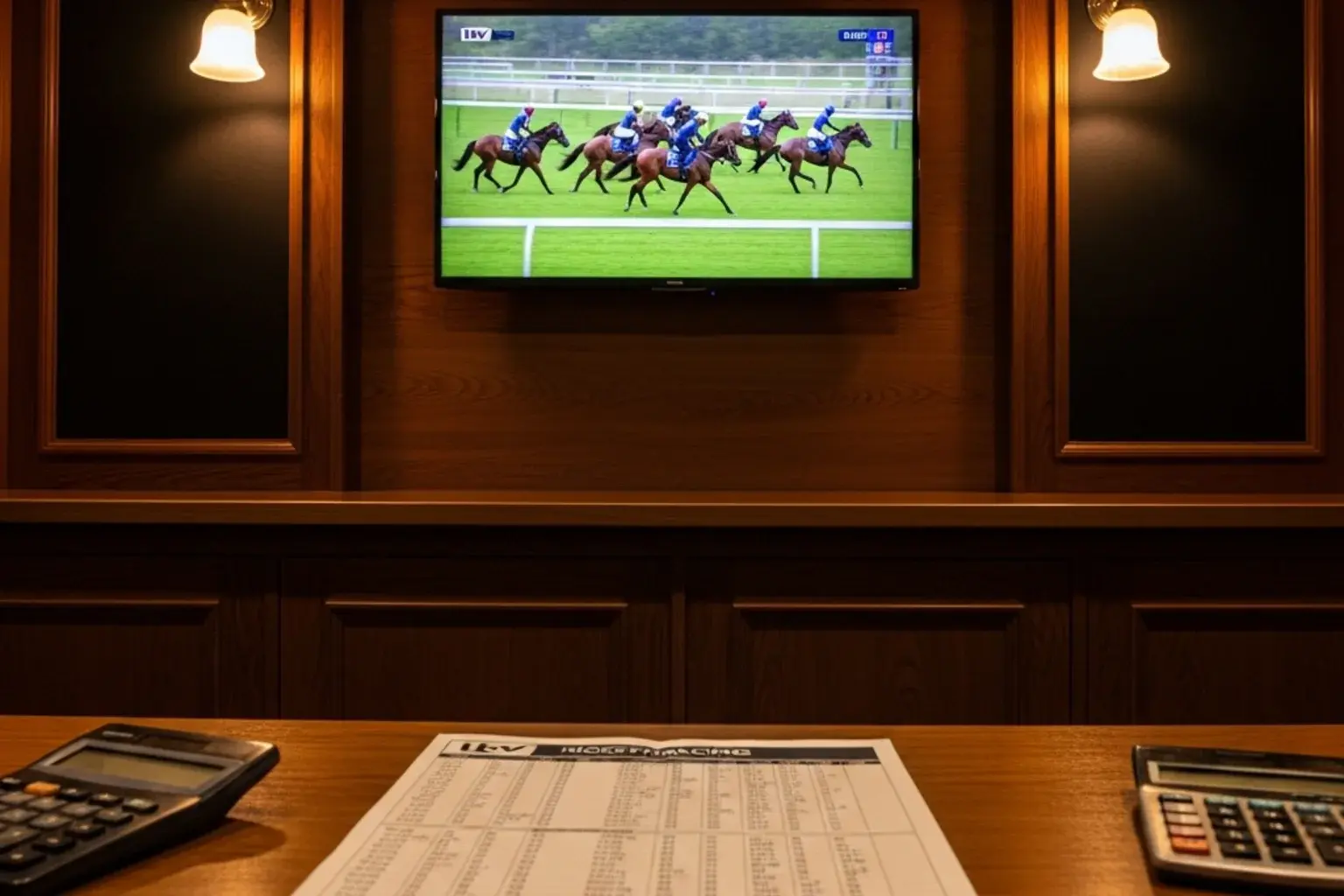
If you want to understand why Lucky 15s exist as a cultural object – not just a bet type but a Saturday ritual – sit in any Wetherspoons across Britain at twelve minutes past one on a winter weekend. The pints arrive, the racing post comes out, the ITV logo flickers above the bar, and someone explains to a nephew, again, what each-way means. ITV’s Saturday racing card is the architecture under which most casual British punting still happens. The Cheltenham Festival might be the loudest week of the year, and Aintree might be the biggest single bet day, but ITV Saturday is the steady metronome of the British betting calendar, and it shapes the vocabulary of multiples more directly than any other broadcast property.
I have written about racing markets for years, and the question I get most often from people outside the industry is: why does my dad always do a Lucky 15 on a Saturday? The answer is that ITV runs a card built around four to seven featured races, almost all of them in a tight afternoon window, almost always handicaps or pattern races with full fields. That is the perfect terrain for full-cover multiples. Bookmakers know it, racecourses know it, the BHA knows it, and the punter – even the one who only bets twice a year – has internalised it without ever being taught.
How Free-to-Air Racing Got Here
The free-to-air racing story is older and messier than ITV’s branding suggests. The BBC carried the Grand National from 1960 to 2012; Channel 4 ran a daily-during-the-week racing show through the early 2000s and then took the lot from 2013; ITV picked up the rights from 2017 and has held them since, with the latest extension running into the late 2020s. Each handover reshaped how British punters discovered races. The BBC era trained a generation to view racing as event television. Channel 4 turned it into a daily habit for the diehards but never quite cracked the casual audience. ITV split the difference: a flagship Saturday product, a leaner midweek presence, and a deliberate pitch to the social-occasion punter rather than the formbook obsessive.
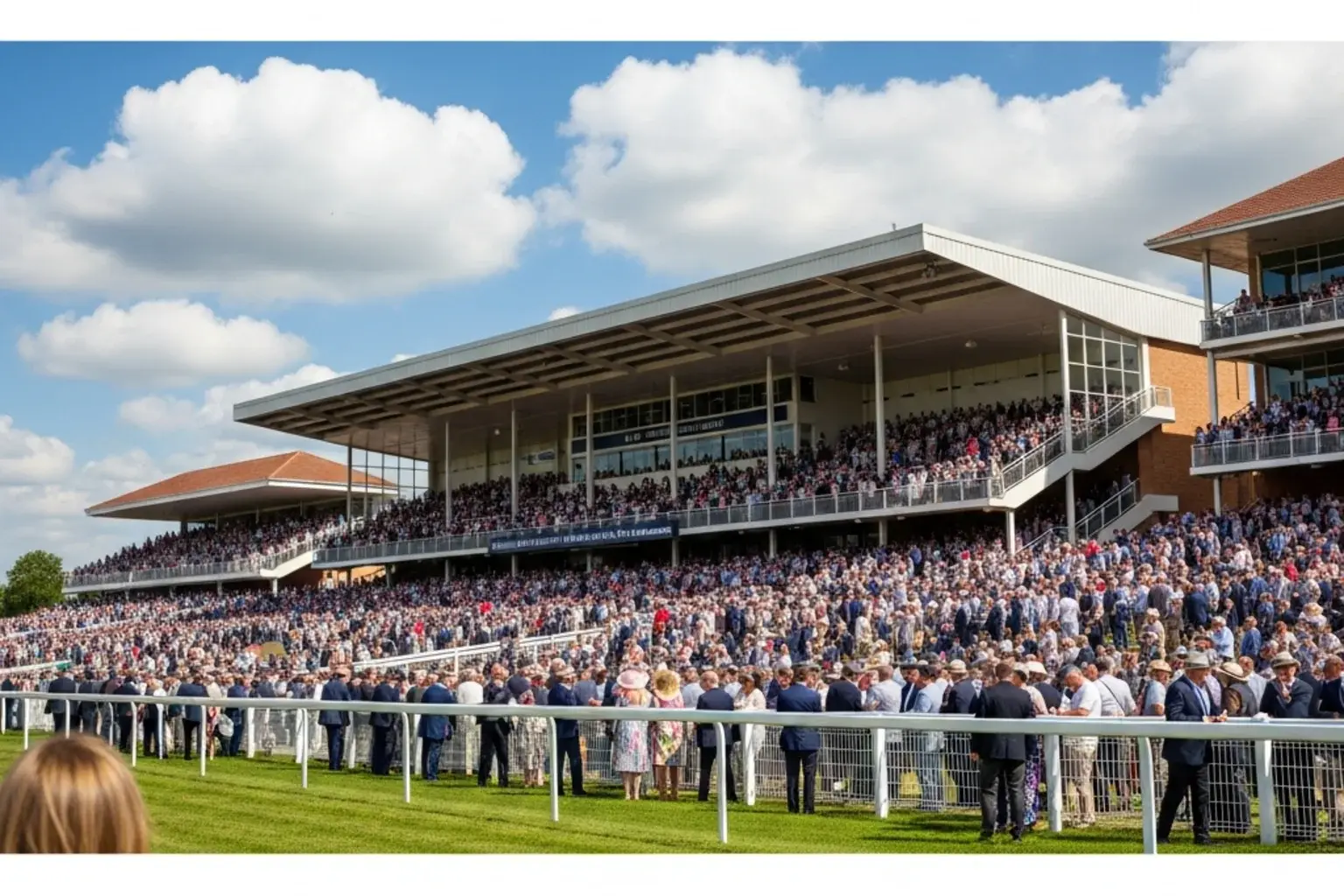
Attendance figures track the shift. In 2024 racecourses across Britain welcomed 4,799,730 spectators across 1,410 completed fixtures, with average attendance up 0.4 per cent year on year to 3,404. Those numbers are not glamorous – racing has not recovered everywhere – but they show a sport that holds its core social occasion proposition. ITV Saturday is the broadcast face of that proposition. The signature meetings on its schedule – King George Day at Kempton, Hennessy weekend at Newbury (now under a different sponsor name), Cheltenham trials in January, the early-summer Derby card – are still appointment viewing for the casual audience that drives the volume.
What ITV did differently was lean into anchors. Ed Chamberlin in the studio, Francesca Cumani trackside in the summer, Oli Bell roving the parade ring – the show looks and sounds like ITV’s football coverage on a Saturday afternoon, and that is no accident. The framing tells the casual punter this is sport, not a niche hobby. Half the vocabulary I use in this article – the language of featured races, in-play prices, headline bets – entered casual British use through that broadcast frame.
What Goes on a Typical Saturday Card
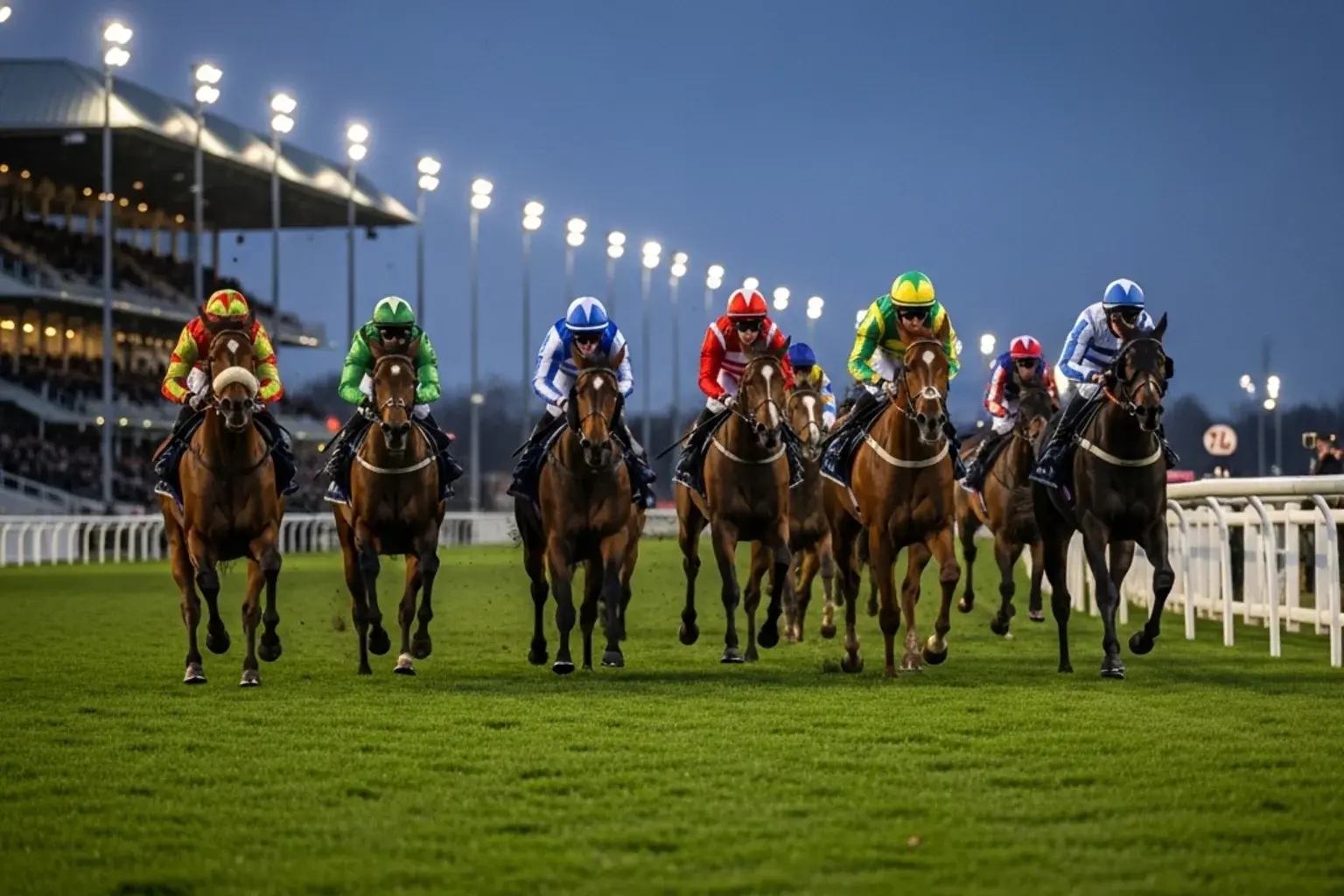
The card itself follows a pattern that has barely changed in eight years. ITV will lead with a midweek-feel preamble in the studio, then run live coverage from two meetings simultaneously, with the running order tuned so that races at the two tracks are spaced out – never quite back-to-back, never quite overlapping. Across an afternoon you will see somewhere between five and eight races on the broadcast, of which four to six are framed as featured. Each featured race gets a dedicated build-up, parade-ring footage, in-play commentary, and a market update card just before the off.
The two meetings chosen for ITV Saturday are not random. The fixture list is built around them. Premier-tier meetings – under the BHA’s reformed structure – cluster on Saturdays because that is where the broadcast and the betting turnover actually are; Core midweek meetings have seen turnover collapse by more than 14 per cent year on year through 2025, while Premier meetings have held flat. The split is not yet visible to most punters, but its effect on the ITV card is clear: better fields, bigger pots, sharper markets. When ITV covers a Listed handicap on a winter Saturday, the prize money has usually been boosted by HBLB’s grassroots intervention, the field is sixteen-plus runners deep, and the each-way market goes to four or five places. That is multiples country.
What you will rarely see on the ITV card: a five-runner novice chase at a Tuesday-class track, a maiden hurdle at a midweek summer meeting, a three-runner conditions race in early March. Those races exist – they pay maiden status, they decide ratings – but they are not the shape of Saturday. The card is engineered for handicaps and pattern races, the two formats that generate the best ITV ratings and the deepest bookmaker prices.
The ITV7 and What a Free Pool Actually Means
The ITV7 is the show’s signature betting game and it deserves explaining because almost everyone gets the proposition slightly wrong. It is a free-to-enter pool game in which you pick the winner of all seven featured races on a given Saturday. Get all seven and you share the prize pool with anyone else who has gone seven from seven. Get six and you share a smaller consolation pool. The prize pool starts at £10,000 most weeks and rolls over when nobody wins, occasionally cresting six figures by late winter.
What the ITV7 is not: a guarantee, a refund mechanism, or a way to back seven horses to win at the price you see in the studio. The prize structure is pool-based, and the dividend depends on how many people pick the same combination. A seven-timer of all the favourites might pay out a few thousand each, because thousands of punters will have done the same; a seven-timer with three priced-up outsiders might be a single-winner jackpot. The mathematics is the same as Tote dividends – collect the pool, divide by the winners – but the entry is free, which changes the punter’s mindset entirely. It is the gateway product for casual viewers, and it works precisely because it is free: you can play along without an account, then open one for the Lucky 15 later if you fancy it. The ITV7 absorbed the role that the old Channel 4 Scoop6 used to play, with the crucial difference that you put nothing in.
The behavioural effect of the free pool is its real value to the racing economy. It gets the laptop open, the form studied, the names learned. By the time a casual punter has played the ITV7 for a season, they know the difference between a chase and a hurdle, can name three or four trainers, and have heard the word handicap enough times to recognise it on a slip.
The Saturday Bonus Cluster
Almost every promotional offer of any size in British racing clusters around ITV Saturday and the big festivals. The reason is rational: that is where the audience is, and that is where bookmakers acquire and retain accounts. The big spend weeks are the festivals – Cheltenham 2025 alone saw 68.8 million separate bets struck across the major UK firms – but every ITV Saturday brings a more modest version of the same recruitment push.
The standard cluster looks like this: extra places on the featured handicap (sometimes seven instead of four), money-back-as-a-free-bet on the second favourite if it loses, best-odds-guaranteed reaffirmed for the day, a boosted price on a heavily backed runner, and occasionally a free-bet token if you stake a fiver on the ITV7 race-by-race. The terms are usually fair, the wagering requirements light, and the upside for an attentive punter genuine. The downside is that the offers exist precisely to nudge casual punters toward larger combination bets – Lucky 15s, Yankees, accumulators – where the bookmaker margin is highest. That is exactly the bet language that grew up around the ITV Saturday card, and it explains why the Cheltenham Festival betting vocabulary intersects so heavily with ITV’s: the broadcast and the bet types co-evolved over fifty years of Saturday afternoon television.