
Board Price vs Starting Price: Tracking UK Market Drifts and Shrinks
One Saturday afternoon, a friend of mine took a 7/1 board price on a horse in a 2:30pm handicap at Doncaster, took the same 7/1 in the shop at 2:25pm just before the off, and stuck a third punt on at SP at 2:30pm exactly. The horse finished second, fortunately at each-way prices, and the three slips paid out at three slightly different rates because the three stamps on the slips were three different prices. The board price had been struck two hours earlier at 7/1; the shop price was 7/1 because the shop price tracked the board through the morning; the SP – the starting price – came back at 8/1 because the on-course money had drifted the horse fractionally in the final ten minutes. Three slips, three different cheques.
The three-prices story is the most under-told feature of British high-street punting and it is the one that the new generation of online-only punters mostly does not see. The morning board price, the on-course board price, the shop price, the online early price, the SP – these are five distinct timestamps on what looks like the same betting position, and the differences across them are the daily texture of the British racing market. This article walks the timeline from the morning to the off and explains what each stamp on the slip actually means, and how the punter chooses between them.
The Morning Line and Where It Comes From
The morning line on a British race is the bookmaker’s first published price of the day and it is the price that the shop and the app both quote from the moment the early markets open. The morning line is published by each major firm typically between 8:00am and 9:00am for the afternoon’s first race, sometimes earlier for big-meeting Saturdays, and it is the reference price for the whole morning. The price is constructed by the firm’s price-makers from the previous day’s positions, the overnight Exchange order book, the form on the racecard, and the firm’s view of where the volume is likely to settle.
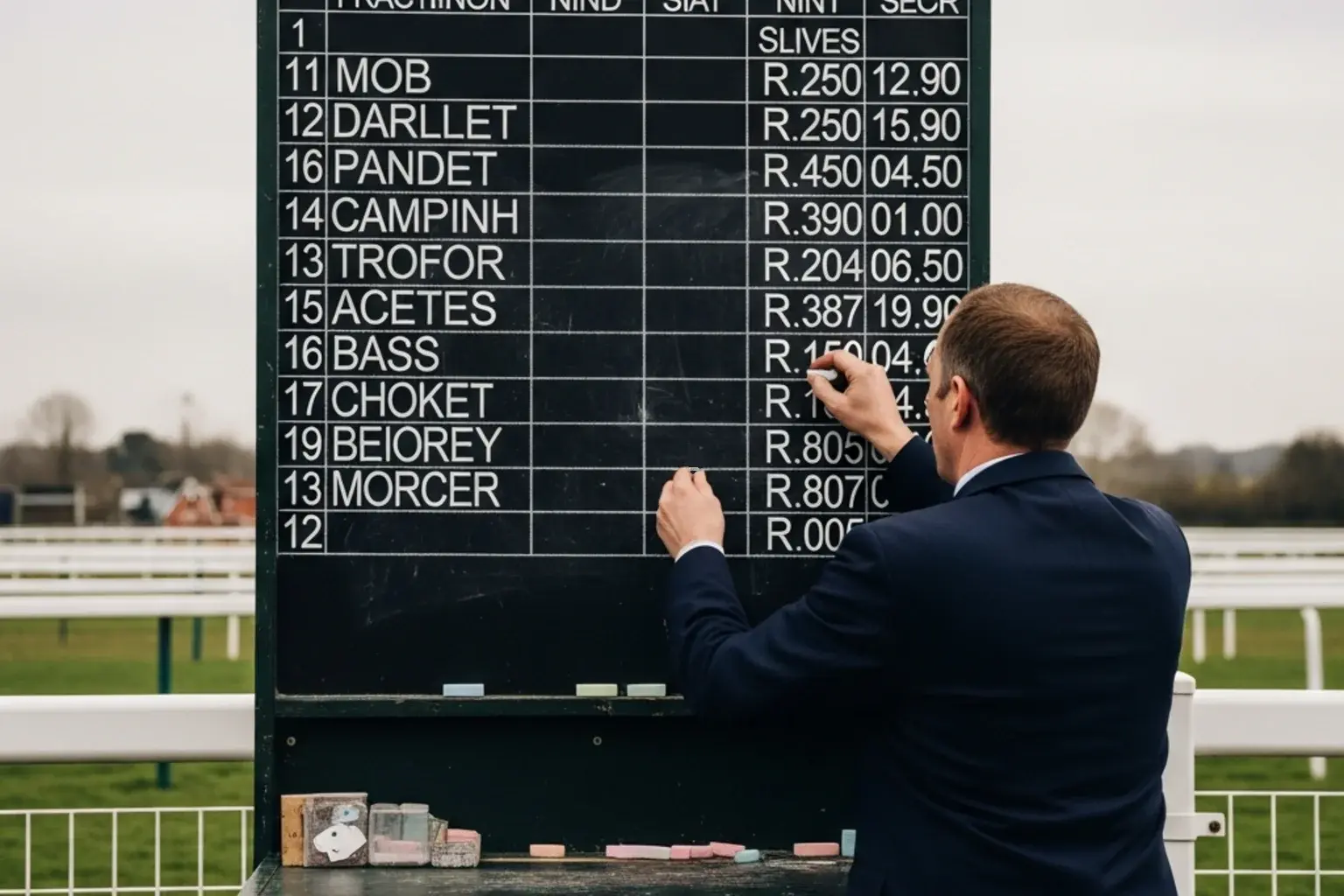
The morning line is not a static figure. It moves through the morning as the bookmaker takes positions on the race and as the wider market state shifts. A horse priced 7/1 on the 9:00am board can be 6/1 by 11:00am if the firm has taken meaningful early money, and 8/1 by 1:00pm if the volume has gone the other way. Each firm runs its own morning line and the lines diverge – sometimes by a price step or two, sometimes by more – which is why the regular punter who shops the price between firms is able to capture a small edge over the season. The price moves are publicly visible on the boards (in the shops) and on the apps (online), and reading those moves is the most direct way to see the wider market state in real time.
The morning line also competes against the early-price market on the day before the race. Some firms publish their morning lines the previous evening for headline races, and those evening prices are often the longest of the cycle on horses that the firm wants to hedge or that the firm believes will be backed in. The Saturday-morning regular punter who is in the shop by 9:00am has access to the freshest morning lines and to the early-price specials that some firms publish for the day’s biggest races. By the time the casual midday punter arrives, those early prices have typically been worked over and the gap between the morning line and the eventual SP has narrowed.
The Board Price On-Course and What It Means
The on-course board price is the second stamp in the daily cycle and it is the price quoted on the boards of the on-course bookmakers in the betting ring. The on-course boards open from around 30 minutes before the off, and the prices they quote are the prices at which the on-course firms are willing to take bets at the racecourse itself. These prices are typically tighter than the morning line because the on-course operator has less margin and because the on-course volume is concentrated in a small window before the off.
The on-course board prices matter because they are the prices that feed into the SP calculation. The starting price returned for each race is computed from a sample of on-course bookmakers’ boards at the moment the race goes off – the SP regulators take the median of the available prices and publish the SP as the official return for the race. The shop and online operators settle SP bets at the published SP figure, so the on-course market is the price-setter for the day-of-race book and the morning line and shop price are the early markets that compete against it. The on-course rails firms have been a smaller share of the British betting handle for many years now – the on-course turnover is a fraction of the off-course and online handle – but the price-setting function of the on-course market remains structurally central.
The British high-street estate that sits alongside the on-course market has been in decline for some time. The licensed betting office count fell to 5,825 in the most recent count, down 1.8% year on year, and the figure now sits roughly 22.8% below the pre-pandemic estate. The shops that remain still publish board prices through the morning and into the afternoon, but the volume on those boards is a smaller share of the daily handle than it was a decade ago. The shop board prices remain a useful signal of where the firm’s pricing sits, and the shop punter still has the option to take the early price on the board rather than wait for SP.
Shop, Online, and the Punter’s Choice
The shop price and the online price are technically the same morning line offered through two different channels, but in practice they diverge for several reasons. The shop price is the board price the customer sees at the counter at the moment they place the bet, with the betting slip stamped at that price. The online price is the price on the app or the website at the moment the customer confirms the bet, with the same timestamp logic but with the price refreshing in real time as the firm’s price-maker updates the market. The two prices converge most of the time but diverge in the minutes immediately before the off, when the online price often moves faster than the shop board because the on-course feed reaches the app before the shop manager has time to update the board.
The wider market context has shaped this divergence. UK racing turnover overall was down 8% year on year in the most recent annual figures, with a meaningful share of that decline concentrated in the high-street estate. The HBLB Interim Chair Anne Lambert has framed the underlying dynamic in characteristically prudent terms – flagging that bookmakers’ profits have been rising even as turnover falls, that the trend may or may not continue, and that the Levy Board needs to plan reserves on the basis that the trend could either reverse or persist. The shop-versus-online split is the visible operational dimension of that wider trend: the shops carry a heavy share of the operating cost base and a shrinking share of the volume, while the online channels carry a growing share of the volume on a much lower marginal cost base. The price divergence between shop and online is, in part, an expression of those different cost structures.
The punter’s choice between shop, online, board and SP comes down to where they read the value. The board price is the right choice on a horse the punter thinks will shorten before the off – taking 7/1 in the morning on a horse that goes off 5/1 is two price steps of value captured. The SP is the right choice on a horse the punter thinks will drift before the off – leaving the bet to SP on a horse that goes 9/1 from a morning 7/1 captures the drift. The shop and online prices in between are options for the punter who wants to lock in a price at a specific moment, and the difference between the two is the small operational variance the firm allows between the two channels.
The Early-Price Decision at the Counter
The early-price decision is the single most consequential one the regular punter makes on any given race. The decision is straightforward to frame: take the morning price now, or wait. The discipline is to make the decision deliberately rather than to default to one or the other. The punter who always takes the morning price loses on every horse that drifts before the off. The punter who always waits for SP loses on every horse that shortens. The punter who reads the form and the early market state and chooses accordingly is the punter who is materially better off over a season.
The three patterns worth identifying are short. First, fancied horses on competitive Saturday handicaps almost always shorten between the morning line and the SP – take the early price. Second, lightly-fancied outsiders on quiet midweek cards often drift between the morning line and the SP – leave them to SP. Third, ante-post-fancied horses on festival markets follow the noisier pattern in either direction depending on the prep race in the days before the meeting – read the prep form before deciding. The wider context – the high-street estate that handles these decisions across the country – is set out in how Britain’s licensed betting office estate has contracted since the pandemic.