
Betfair Exchange Mechanics: Commission Rates on Back and Lay Bets
The first time I traded a price on the Betfair Exchange – early 2000s, the platform was still a curiosity in betting-shop conversations – I lost £20 in three minutes because I clicked the lay column thinking it was the back column. The lesson was crisp and the lesson stuck. The Exchange is a different game from the high street, and the words it uses are different. Back and lay, the two columns, the two sides of every market, the two ways a punter can take a position on a British race. The Exchange did not invent peer-to-peer betting, but it did normalise it in Britain and it taught a generation of punters a second language for the sport.
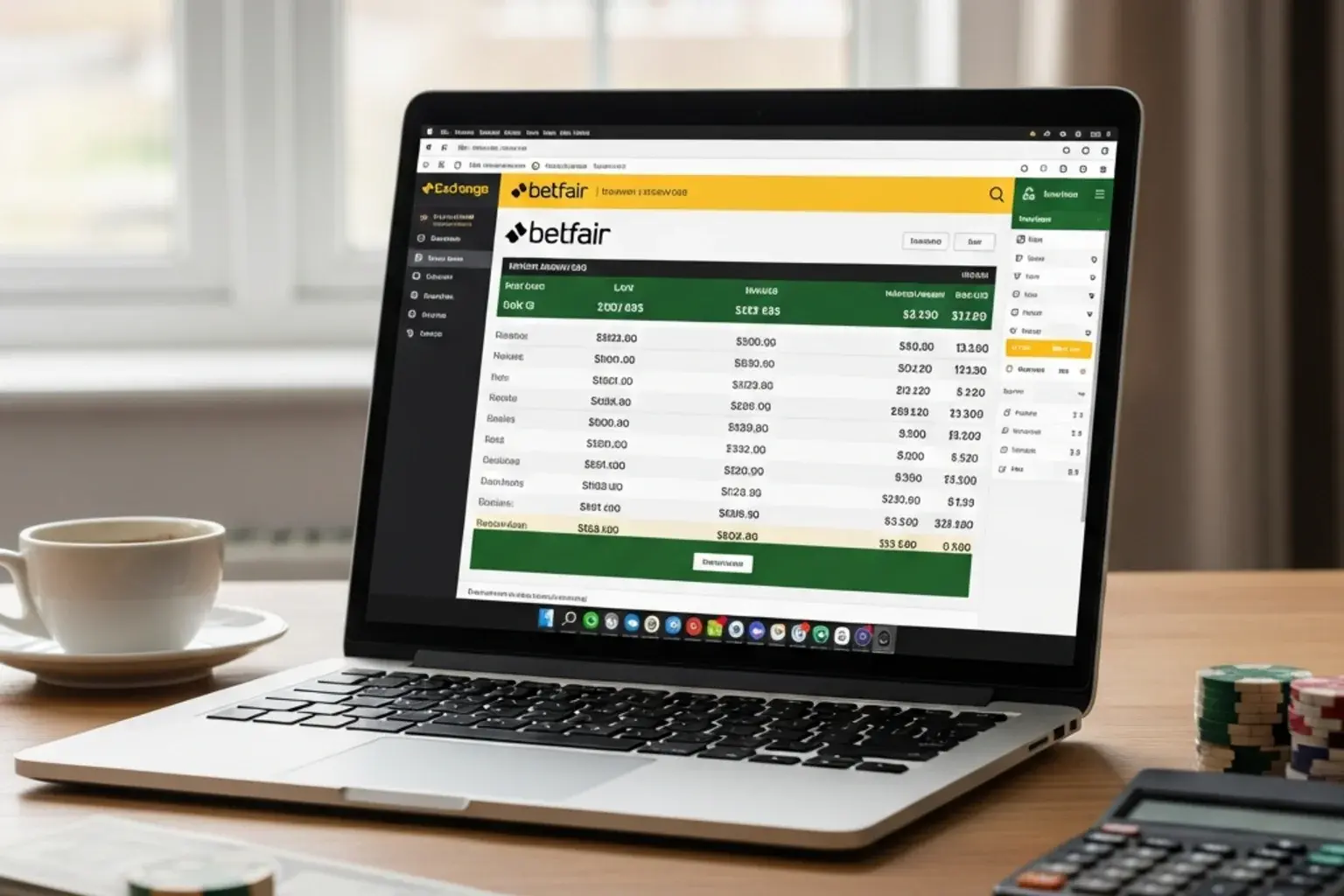
The premise of the Exchange is structurally different from the bookmaker model. There is no operator setting a price and offering it to a customer. There is a marketplace, an order book, and two populations of users – those willing to back at a posted price and those willing to lay at the same price – meeting one another across the book. Every matched bet on the Exchange is one user’s back against another user’s lay, and the Exchange’s commission on the winning side is the operator’s revenue stream. The implications run deep. The Exchange did not just give British punters a new platform; it gave them a new vocabulary, a new strategic logic, and a new lens through which to read every other betting market in the country.
What Back and Lay Actually Mean at the Order Book
Sit in a betting shop on a Saturday and the words on the board are a one-way trade. The shop offers a price, the punter accepts the price or walks away, and the bet is on the horse to win. The Exchange order book is a two-way trade and the language reflects it. The back side of the book is the side where a user is offering to back a horse at a stated price – they will commit a stake at, say, 6/1, and they need somebody on the other side of the book to accept that price. The lay side is the side where a user is offering to lay the horse – they will accept the stake at 6/1 and pay out the winnings if the horse wins. The two columns mirror each other and the matched price is the price at which the two columns meet.
The lay bet is what makes the Exchange a different sport. Laying a horse is taking the bookmaker’s position on that single horse – the layer wins the stake if the horse does not win, and pays out the full odds-to-stake if the horse does win. Lay £100 on a 6/1 horse and the layer holds £100 of liability if the horse wins (£600 payout minus the £100 stake) and earns £100 if the horse loses or fails to place. That is the inverse of the back bet: the back bettor risks £100 to win £600 if the horse wins; the lay bettor risks £600 to win £100 if the horse does not win. The Exchange’s structural innovation is to let any user take either side of the trade.
The size of the user base matters because the Exchange’s liquidity depends on it. The Gambling Commission’s most recent figures put the UK active betting account population at around 24.4 million accounts across all licensed operators, with a meaningful share of that population active on the Betfair Exchange in particular. The Exchange’s horse racing markets are the deepest single set of order books on British racing, and the matched volume on a major Saturday card runs into the tens of millions of pounds. The depth of the order book is what makes the matched prices reliable and what makes the BSP – the Betfair Starting Price – a meaningful comparator to the bookmaker SP on a competitive market.
The Order Book and the BSP
The Betfair Starting Price is the matched price calculated at the moment the race goes off, and it deserves a section of its own because the mechanics are different from the bookmaker SP. The BSP is computed by the Exchange engine at the off using the orderbook auction – the algorithm sweeps all the unmatched back and lay orders on the market and computes the price at which the matched volume is maximised. The resulting BSP is a single matched price for every horse in the market and it is the price at which any unmatched BSP-tagged orders are settled. The auction runs in the few seconds immediately before the off and the engine publishes the BSP as the race starts.
The BSP order itself is a peculiarity of the Exchange. A user can place a back or lay order tagged for BSP rather than at a specified price, and the order is matched at the BSP value once the auction completes. The practical consequence is that any user who wants to take the BSP – whether to lock in a price on a fancied horse or to lay a short-priced favourite at the off – can place a BSP order in the hours before the race and let the engine handle the matching at the off. The BSP is not the same as the bookmaker SP and the two figures diverge in characteristic ways: BSP tends to be longer than bookmaker SP on competitive favourites and tighter than bookmaker SP on extreme outsiders.
The auction structure also means that the BSP itself is a measurable signal. Sharp money flowing into a horse in the final hour before the off shows up in the BSP forecast on the order book, and the matched volume in the same window is the cleanest measure of where the market is moving. Reading the BSP forecast on the Exchange has become a standard tool for serious British punters who use the Exchange data to inform their decisions about whether to take the early price at the bookmaker or wait for the BSP itself.
When Laying Beats Backing
Laying a horse is the most distinctive Exchange position and it is the one most poorly understood by recreational punters. The strategic case for laying is straightforward in three patterns. First, the short-priced favourite in a competitive handicap where the punter’s read on the form is that the horse is overpriced – laying the 6/4 favourite in a 16-runner handicap, with the liability priced into the position, is a position that pays well when the read is right and pays comparable losses when wrong. Second, the popular horse in a small-field race where the public has overbacked the form – laying the 1/2 favourite in a four-runner Grade 1 chase where the punter believes the form is no better than 4/5 is a position with manageable liability and consistent edge over a season. Third, the in-play lay against a horse drifting in the betting on the way to the off – laying a horse whose price is moving against it in the final ten minutes before the race captures the market signal at lower liability than a pre-race lay would carry.
The discipline that ties laying together is the explicit measurement of liability against the stake. A lay bet’s downside is the gross winnings the layer would owe if the horse wins – and that downside is many times the upside on any short-priced lay. The well-run lay book sizes positions by liability rather than by stake, and that discipline is the single most important difference between a profitable Exchange book and a recreational one. The wider context – including how the bookmaker’s margin is calculated and how the order-book pricing on the Exchange compares with the bookmaker book – is set out in how UK bookmaker overround and margin work on British racing markets.