
LBO Market Statistics: Analyzing UK Retail Betting Shop Closures
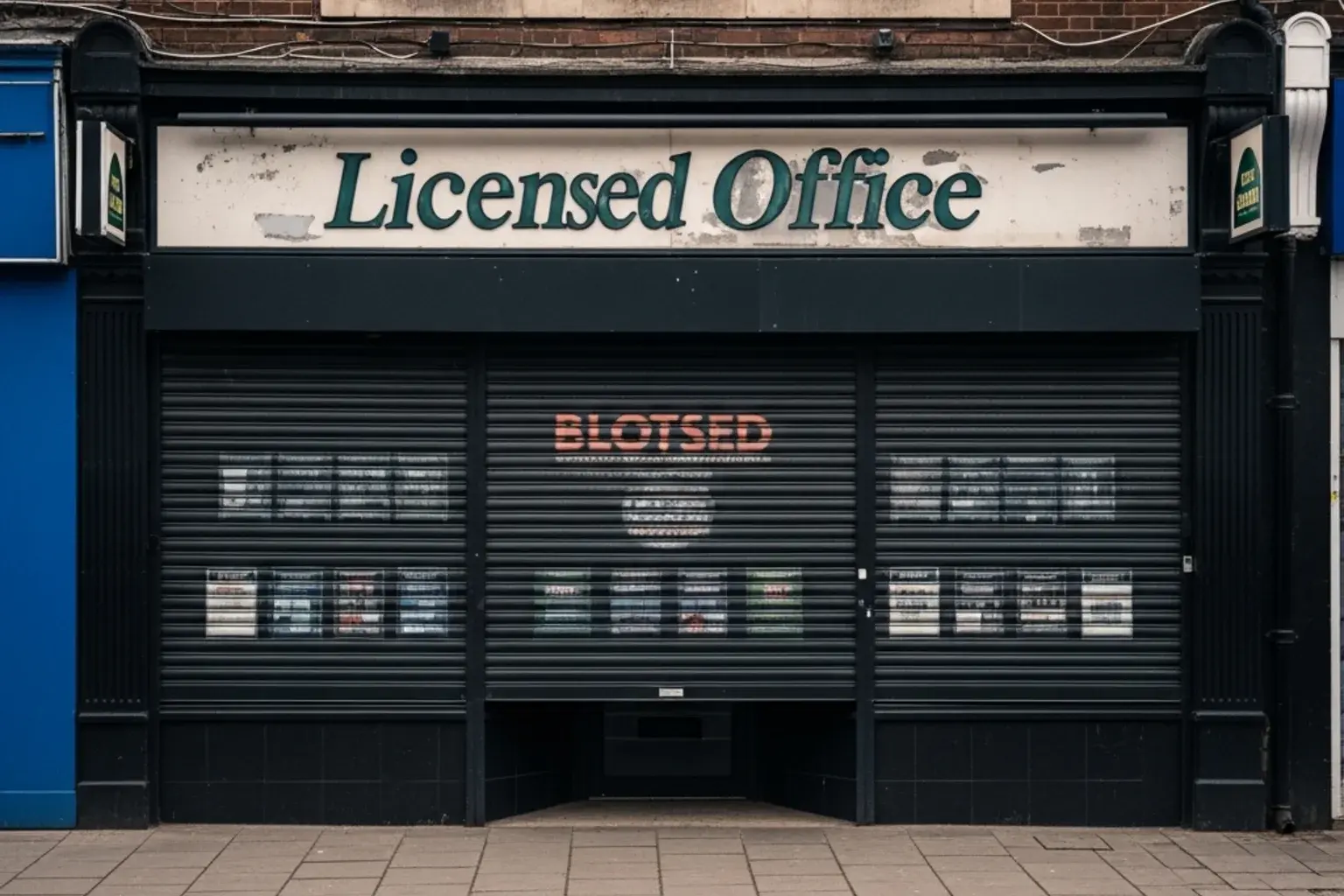
I walked past a boarded-up Ladbrokes on a Yorkshire high street in the spring of 2024 – fascia still up, blue paintwork peeling, a Final Closure notice in the window with a date six weeks earlier. Three doors down, an independent bookmaker that had been open since 1973 was still trading, its board offering the afternoon’s Pontefract card to a row of older punters in the doorway. That stretch of pavement is the story of the British high street’s betting estate in microcosm – a chain shop gone, an independent surviving, and a wider population of punters who have largely moved their afternoons onto the app on the kitchen table.
The figures put numbers on what the pavements show. Britain’s licensed betting office count has fallen to 5,825 at the most recent annual measurement, down 1.8% on the prior year and roughly 22.8% below the pre-pandemic estate. The drop is the steepest sustained decline in the British high-street retail betting market since the introduction of off-course betting in 1961, and it is the visible expression of a structural shift in how the British public bets on racing, football and the smaller sports that the high-street shop used to be the only place to engage with. This article walks the story.
The 5,825 Headline and What Got Britain to This Number
The 5,825 figure is the published count of licensed betting offices in Great Britain at the most recent annual reporting date. The figure is collected by the Gambling Commission as part of its standard sectoral reporting and it counts all premises with a current LBO licence regardless of the operator. The peak count was reached around 2010, when the British estate had roughly 9,000 LBOs across the major chains and the independents. The post-2010 trajectory was a slow decline through the early 2010s, a sharper drop following the 2019 FOBT stake reduction, and an accelerated contraction through the pandemic and into the post-pandemic recovery years. The aggregate decline of 22.8% from the pre-pandemic estate is concentrated in the chain estate; the independent share of the total has held up proportionally, though the absolute count of independents has also fallen.
The geography of the decline matters as much as the headline. The shops that have closed have closed disproportionately in the high streets of mid-sized English towns and in the suburbs of the major cities – places where the chain estate was densest before the pandemic and where the foot-traffic decline has been most severe. The shops that have survived have tended to be the independents in racing towns, the metropolitan-centre shops with high through-traffic, and the chain shops in catchment areas with limited online penetration. The closures have not been even across the country and the experience of a punter in central London is materially different from the experience of a punter in a mid-sized town in the West Midlands or the North East, where shop closures have been most visible.
The cost base of the LBO estate has been the proximate cause of the closures. Business rates on high-street retail premises have risen through the post-pandemic period, staff costs have risen with the wider labour market, and the per-shop volume of betting handle has fallen as customers have moved online. The combination produces a per-shop economics that no longer supports the chain estate at the pre-pandemic density, and the chain operators have responded by closing the marginal shops and concentrating their estate on the higher-volume catchments. The independent shops have followed a similar logic at a smaller scale, with the difference that the independent operator has typically been more committed to specific catchments and has been slower to close even on marginal economics.
The FOBT Stake Limit and the Trigger of 2019
The FOBT – fixed-odds betting terminal – was the high-margin gaming product that sat alongside the racing and sports betting in the British shop estate from the early 2000s onwards. The terminals offered roulette, slots and similar games at maximum stakes of £100 per spin, and they were the single largest source of LBO gross gaming revenue from around 2005 onwards. The £100 stake limit was reduced to £2 per spin in April 2019 following a series of reviews on harm-related concerns, and the impact on LBO economics was immediate and severe. The per-shop FOBT revenue fell by approximately 70% within months of the change, and the operators announced large-scale shop closure programmes within the same year.
The 2019 closures were the visible peak of the FOBT-driven contraction. The major chains announced closure programmes affecting several thousand shops in aggregate over the 2019 to 2021 period, and the cumulative effect on the estate was the loss of approximately 1,500 LBOs between the 2019 stake reduction and the 2021 reporting figures. The pandemic closures of 2020 to 2021 layered on top of the FOBT-driven contraction and the two effects became difficult to separate in the aggregate figures. The Gambling Commission’s reporting through that period showed continuous decline in the estate count year on year, with the steepest single-year fall occurring in the 2020 reporting year as the pandemic compounded the FOBT effect.
The wider policy debate has continued through the post-FOBT period. The 2023 White Paper on gambling and the subsequent regulatory reviews have addressed the wider market – affordability checks, online stake limits, advertising restrictions – but the LBO estate has remained relatively peripheral to the regulatory focus because the shops carry a much smaller share of the overall handle than the online channels. The shop operators have argued for a stable regulatory environment to allow the surviving estate to find a sustainable footing, and the regulatory direction has broadly accommodated that argument. The future of the LBO estate is now less about regulatory shocks and more about the slow trajectory of high-street retail in general.
Online Migration and the Lost Handle
The migration of betting handle from the shops to the online channels has been the deeper structural force behind the LBO contraction. The most recent Gambling Commission figures show online betting turnover on horse racing falling £1.6bn over a two-year window, but the wider context is that the shop handle has fallen faster than the online handle and the net effect is a sport that is contracting in total even as the online channels grow share. The customer who used to walk into a shop on a Saturday afternoon to put on a Lucky 15 on the ITV card is now putting the same Lucky 15 on the app on the sofa, and the shop’s lost revenue is the operator’s gain on the digital side rather than a net new revenue stream.
The migration has been most pronounced among younger punters and among the casual recreational betting population. The committed high-street regular – typically older, often retired, with a routine of an afternoon in the shop two or three times a week – has been slower to move online and the shops that have survived have tended to be the ones with the strongest concentration of that population. The independent bookmakers in particular have built their surviving estate on a customer base of regulars whose loyalty to the shop is part of a social routine rather than a pure price-based shopping decision. The chain shops have lost more of this customer population because the chain offer has been less differentiated from the app offer, and the customer who moves online finds the chain’s app experience essentially identical to the chain’s shop experience.
The economic implication is that the shop estate’s gross margin has come under sustained pressure as the volume has fallen faster than the fixed cost base. The shop’s per-customer economics have improved on the surviving customers, but the volume reduction has more than offset the per-customer margin improvement. The operators have responded by closing the marginal shops, consolidating the surviving estate around the high-foot-traffic catchments, and accepting that the LBO is now a complementary channel to the digital business rather than the core revenue source it was in the 2000s.
What the Surviving Shops Still Offer
The shops that remain open in 2026 still offer a meaningful product to the punter who values them. The board price is on display in real time and the slip is stamped at the counter at the moment of the bet, which gives a different texture to the punting decision than the silent confirmation of an app. The independent shops in racing catchments still maintain their connection to the local trainers and the local form, and the conversation in those shops on a Saturday afternoon is a part of the British racing culture that the app cannot replicate. The chain shops still process the bulk of the surviving high-street handle and they still offer the standard product set – Lucky 15s, ante-post slips, in-play singles on the live racing – at consistent prices across the estate.
The product range in a modern shop is narrower than it was twenty years ago. The FOBT terminals are still in the shops but at the lower stake limit, and the gross margin on the machines is materially below the pre-2019 level. The retail-only specials that the chains used to run on Saturday afternoons have largely disappeared, with the firms preferring to put their promotional spend behind the digital channels. The shop punter who used to find a 7/1 Lucky 15 special in the window now finds the same 7/1 on the app, with the shop offering the slip and the social texture rather than the price differential. The future of the shop estate as the high street continues to contract is the wider question for the British high-street retail sector, and the role of the betting shop as part of that future is connected to broader policy choices about the funding model of the sport, including the levy and the tax framework set out in how the Horserace Betting Levy works and where the money goes.